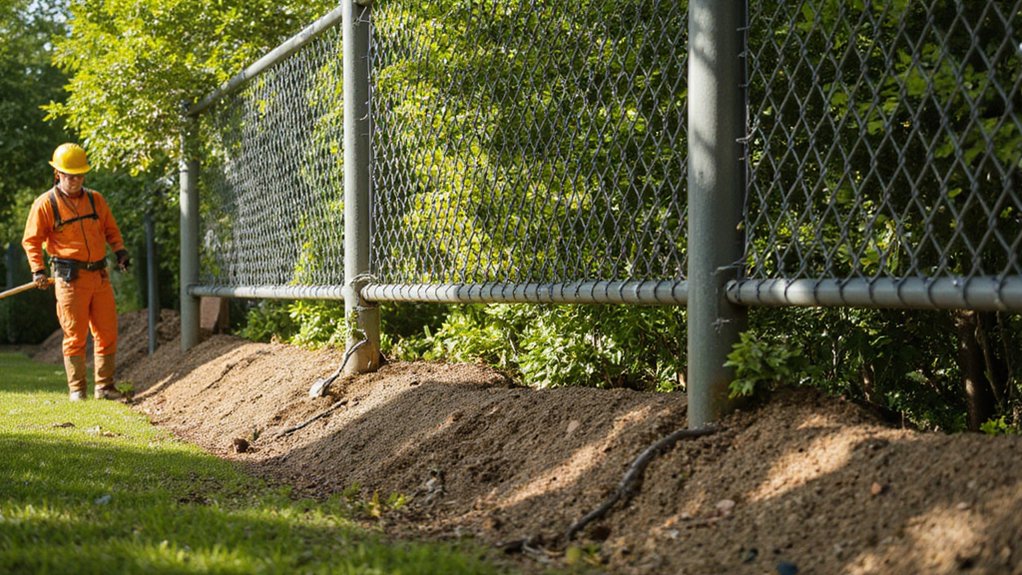
Uneven ground makes fence installation harder. No way around it. Slopes, dips, rocks, and soft soil can turn a simple project into a headache fast. But here’s the good news. A yard doesn’t have to be flat for a fence to look straight and hold up for years.
Experienced fence installers deal with uneven ground all the time. They look at the slope, check the soil, and choose the right build method so the fence stays strong and looks right. Whether your yard has a gentle hill or a few trouble spots, there’s a way to handle it.
Let’s walk through how they do it and what actually works in real yards.
Key Takeaways
Before getting into the details, here’s the short version of what matters most.
Fence installers start by checking the slope, drainage, and soil movement. They use racked or stepped fence styles to match the ground instead of fighting it. Low spots get filled and packed down so posts don’t sink later. Rocky areas call for the right digging tools. Posts go deep, and loose soil gets wider footings to keep everything steady.
Now let’s break that down in a way that actually makes sense.
Reading Your Yard Before Any Holes Get Dug
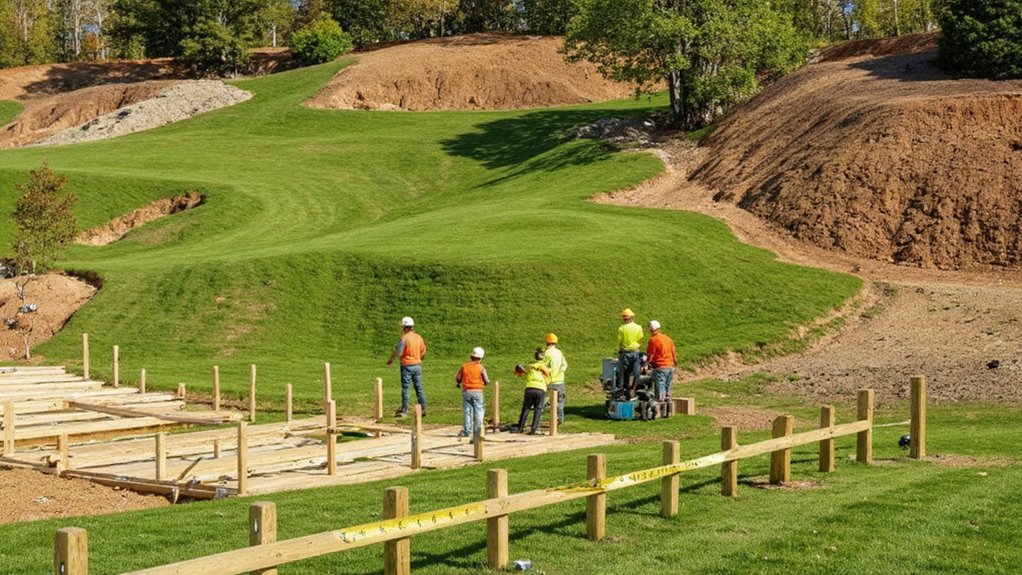
The smartest fence jobs start before the first post hole. You need to understand what your yard is doing.
Look at the slope first. Does the ground drop slowly, or does it fall off fast? Both matter. A small slope might only need minor adjustments. A steep one changes the whole plan.
Next, pay attention to water. After a heavy rain, where does it go? If water runs along the fence line or pools in certain spots, that can cause posts to shift later. Soil that moves with water won’t hold a fence well unless it’s handled the right way.
Erosion is another clue. Exposed roots, washed-out dirt, or uneven patches usually mean the ground has been moving for a while. Ignoring that almost always leads to leaning posts later.
Getting this part right saves a lot of frustration down the road.
What Actually Works on Sloped Ground
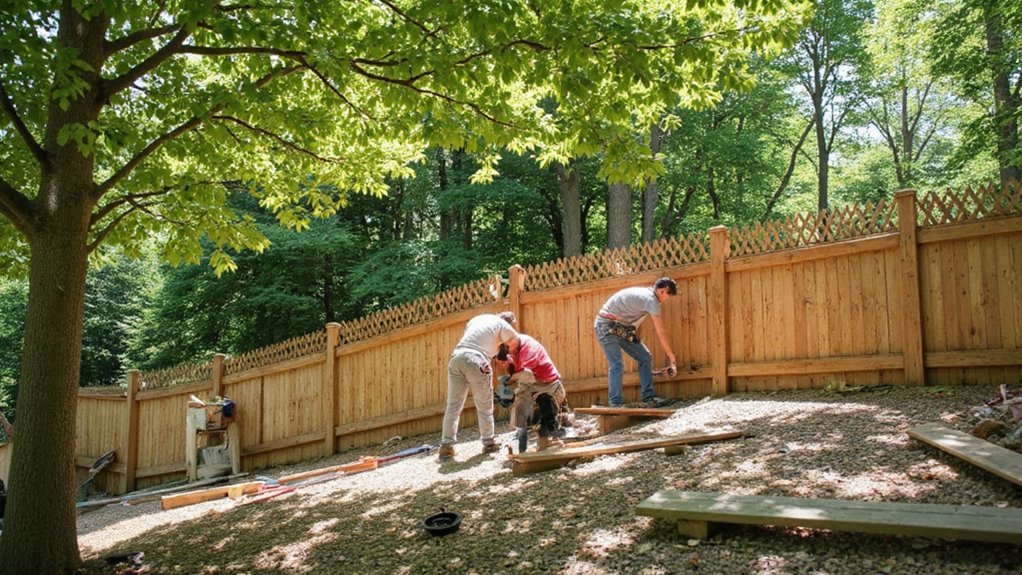
Slopes scare a lot of homeowners, but fence installers have two go-to options that work well.
Racked fences follow the slope of the ground. The panels tilt slightly so the bottom stays close to the soil. This works best on gradual slopes and keeps gaps small.
Stepped fences break the fence into flat sections that drop down in steps. You’ll see this on steeper hills. Each section stays level, but the fence height changes as it moves downhill.
Post height matters here too. Posts often get cut or set at different depths so the top line of the fence looks clean. On slopes, posts also need to go deeper to handle sideways pressure. Concrete is usually added for extra hold, especially if the ground is loose.
Handling Dips and Low Spots Without a Wavy Fence
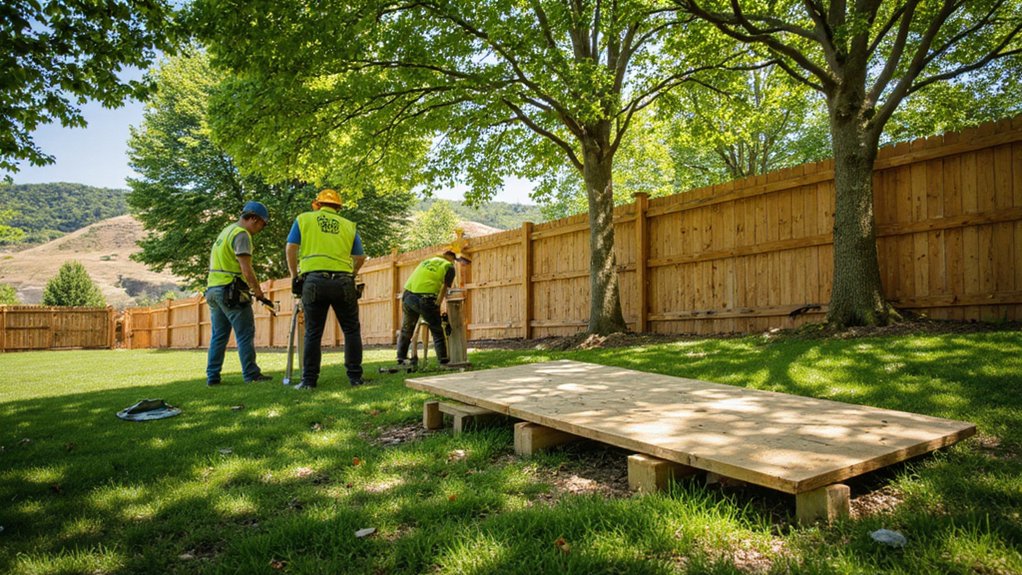
Low spots are sneaky. They don’t always look like a big deal until the fence starts sinking.
The first step is figuring out how deep the dip really is. Some only need a little fill. Others need more work to stop future settling.
Most installers fill low areas with gravel or packed soil, layering it and compacting it tightly. That creates a firm base instead of a soft patch that shifts later. Posts set on loose fill without packing almost always move.
Adjustable post anchors can help too. They allow small height changes so the fence stays straight even if the ground varies a bit along the line.
Getting Through Rocky Ground Without Losing Your Mind
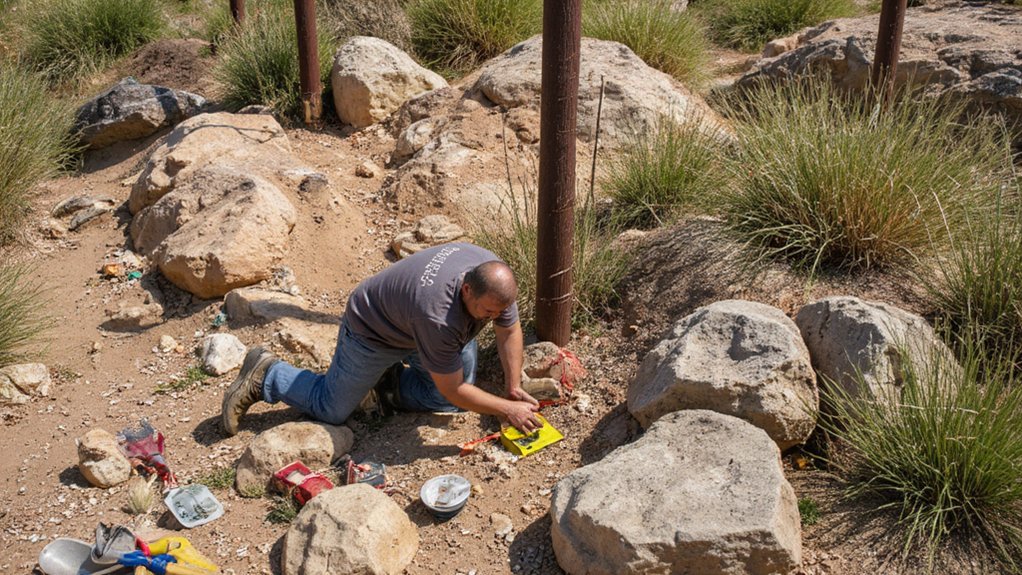
Rocky soil slows everything down. Anyone who’s tried digging into it knows how frustrating it gets.
A rock bar is often the first tool out. It’s used to pry loose stones and break up packed areas. For post holes, manual diggers work sometimes, but powered augers are usually faster when the ground fights back.
Once the hole is in, leveling becomes critical. A laser level or long spirit level helps keep the fence straight even when the ground isn’t. Gravel often goes into the bottom of the hole to improve drainage and add stability.
Rocky ground is tough, but with the right tools, it’s manageable.
Keeping the Fence Solid Long After Installation
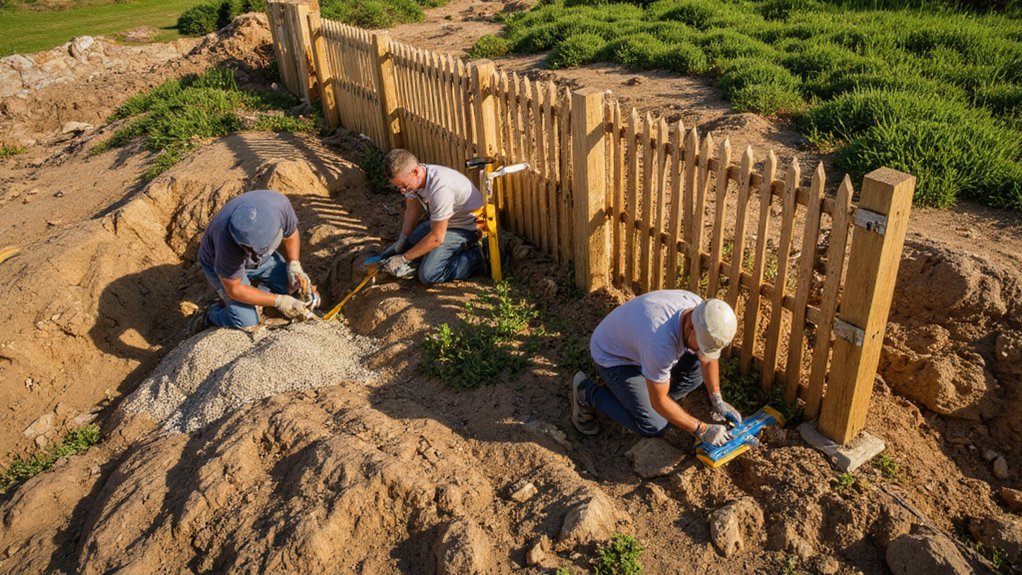
Uneven ground puts more stress on fence posts. That’s why securing them correctly matters so much.
Material choice plays a role. Heavier wood and quality vinyl hold up better than lightweight options, especially on slopes.
Soil type matters too. Sandy soil needs wider concrete footings to stop posts from shifting. Clay soil needs deeper holes so posts don’t loosen as the ground expands and shrinks.
Every post should be checked with a level as it’s set. Small adjustments early prevent big problems later. Adding gravel around the base helps water drain away, which keeps posts from rotting or moving over time.
Frequently Asked Questions
What fence styles work best on uneven ground?
Vinyl and chain-link fences work well because they can adjust to changes in height. Wood fences also work if they’re built using racked or stepped sections.
How should I prep my yard before installing a fence?
Start by clearing debris and marking the fence line. Check for low spots and drainage issues. Knowing where the ground moves helps avoid problems later.
Can I install a fence myself on uneven ground?
You can, but it takes more time and patience. Adjustable posts, careful leveling, and proper filling are key. Skipping steps usually leads to leaning sections.
Do I need permits for fences on slopes?
Many areas have rules about fence height and placement, especially on sloped lots. Check with your local zoning office before starting.
How long does installation usually take?
Most fences on uneven ground take one to three days. The exact time depends on how rough the terrain is and how many adjustments are needed.
Final Thoughts
Uneven ground doesn’t mean you’re stuck with a crooked fence. It just means the job needs the right approach. When the slope is handled correctly, low spots are packed down, and posts are set deep and straight, the fence holds up just fine.
The ground might be uneven, but your fence doesn’t have to be.