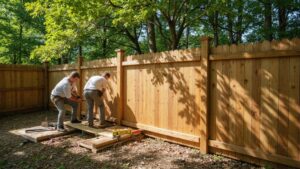
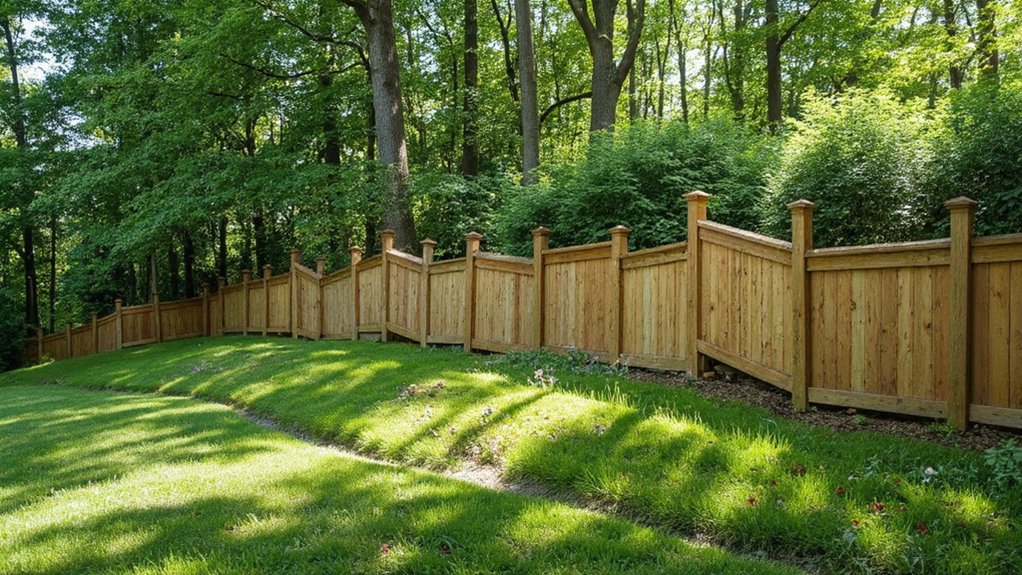
Installing a fence on a sloped or uneven yard is absolutely possible. It just takes more planning than a flat lot. Slopes change how posts are set, how panels line up, and how water moves through the soil. If those details are ignored, fences can lean, gaps can appear, and repairs show up sooner than expected.
With the right approach, a fence on uneven ground can look clean, feel solid, and last for years. The goal is to work with the land instead of trying to force everything into a straight line. Below, you will find a clear breakdown of the challenges, design options, installation methods, and maintenance tips that matter most when fencing a sloped yard.
Key Takeaways
- A fence can be installed on a sloped yard with proper planning and layout.
- Stepped and raked fence styles help manage changes in elevation.
- Measuring the slope early prevents alignment and spacing issues.
- Certain materials handle uneven ground better than others.
- Ongoing checks help keep the fence stable as the ground shifts.
What Are the Challenges of Fencing on a Slope?
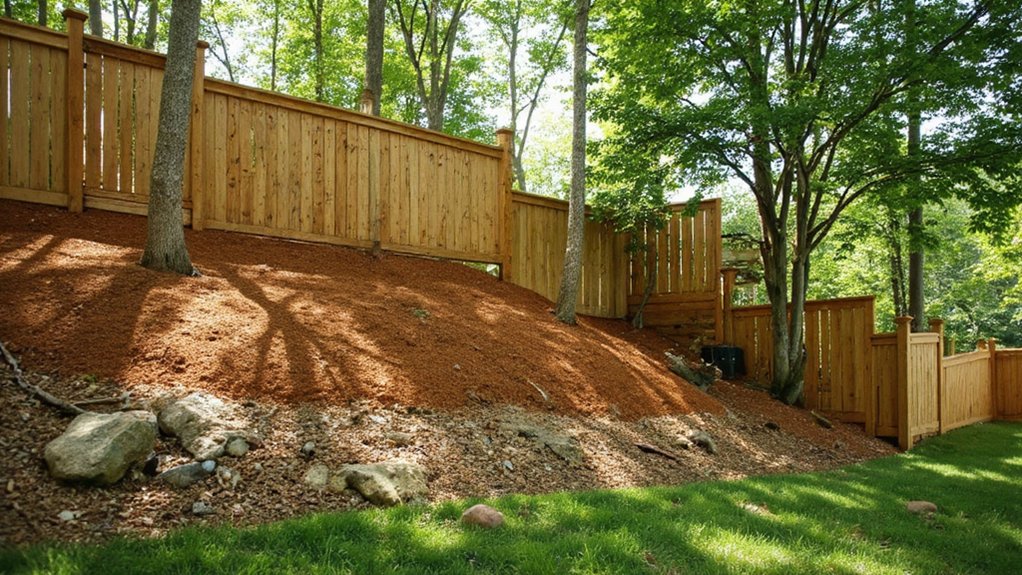
Fencing on a slope introduces challenges that do not exist on flat ground. The most obvious issue is alignment. Posts must remain straight while the ground rises and falls beneath them. Without careful measuring, panels can tilt or sit unevenly, which affects both appearance and strength.
Another concern is soil movement. Sloped yards often experience runoff after rain. Water moving downhill can wash soil away from posts over time. When that happens, posts loosen and sections shift. This problem shows up slowly, which is why it is often missed during installation.
Spacing is another common hurdle. On uneven ground, measuring from post to post takes more attention. A small error can lead to gaps under the fence or panels that do not fit as planned.
Types of Fences Suitable for Uneven Terrain
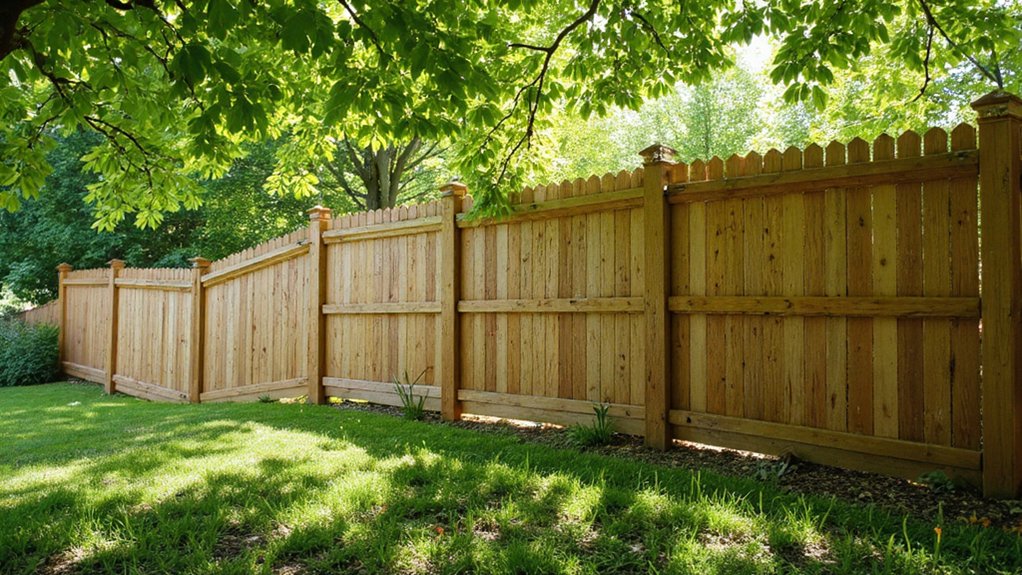
Not all fences perform the same way on a slope. Some styles adapt easily, while others fight against the terrain.
Wood fencing is a common choice because it can be cut and adjusted on site. Individual boards allow flexibility when working with height changes. Vinyl fencing also works well, especially when designed for raked installation. Many vinyl systems allow panels to angle slightly to follow the ground.
Chain link fencing handles slopes with ease. The mesh naturally follows the contour of the yard, which reduces gaps and keeps a consistent look.
Decorative options like picket or lattice fences can work too, as long as the layout accounts for spacing changes. In some cases, a short retaining wall paired with fencing creates a clean transition on steeper slopes.
Planning Your Fence Installation on a Sloped Yard
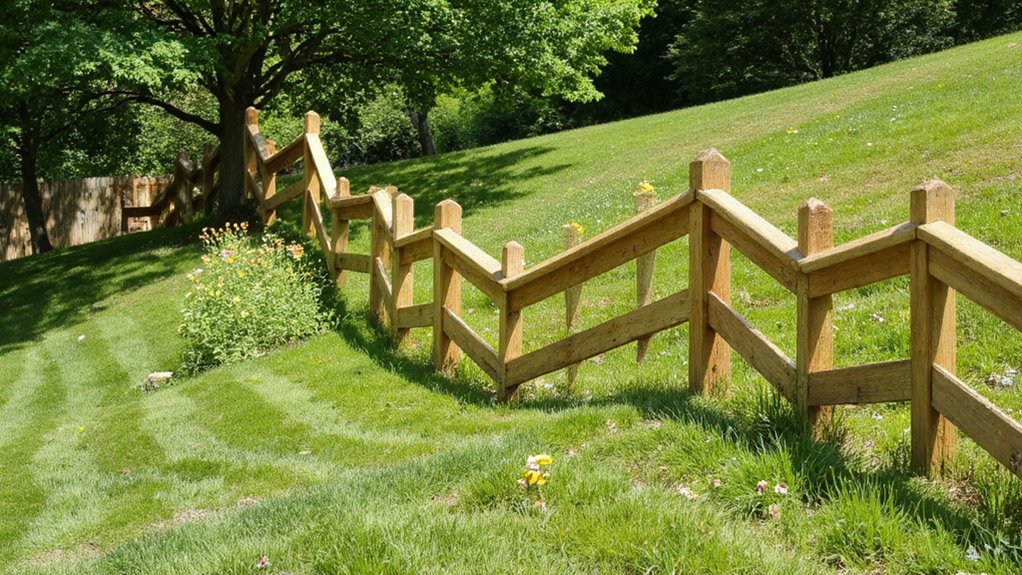
Planning is the step that determines whether a sloped fence turns out clean or frustrating. Before digging any holes, it helps to understand how the ground behaves across the entire fence line.
Assessing Yard Grade
Start by measuring the slope from one end of the fence line to the other. Use a long level and measuring tape to note changes in height. Mark high and low points with stakes. This gives a clear picture of how steep the slope really is.
Gentle slopes often allow for simpler layouts. Steeper grades may need stepped sections or extra grading. Pay attention to where water flows after rainfall. Areas where water collects or moves quickly may need deeper post holes or added gravel.
Taking time with this step avoids guesswork later.
Choosing Fence Style
Fence style matters more on a slope than on flat ground. A stepped fence keeps panels level and drops them down gradually. This style creates a staircase look along the bottom edge.
A raked fence angles panels to follow the slope. This produces a smoother line that hugs the ground. Not every fence system supports raking, so checking manufacturer limits is important.
Material choice also affects upkeep. Wood offers flexibility but needs routine care. Vinyl requires less maintenance but has angle limits. The right match depends on the yard and how much ongoing work you want.
How to Install a Fence on a Sloped Yard
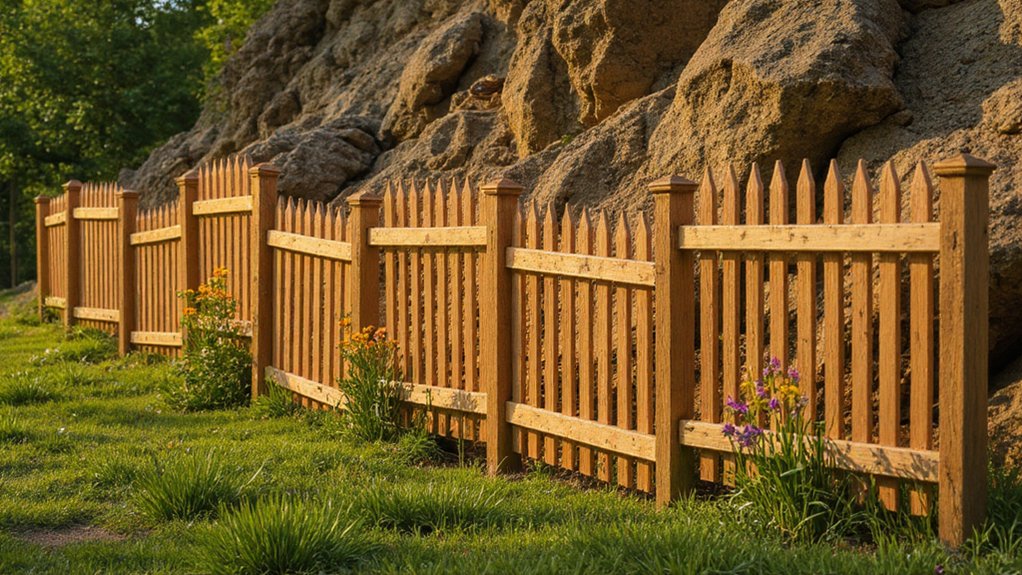
Fence installation on a slope begins with accurate post placement. Posts should always be set straight, even when the ground is not. Dig holes deeper on downhill sections if needed to maintain post height consistency.
Concrete helps secure posts in uneven soil. Adjust post height before the concrete sets so each section lines up with the chosen design. String lines are helpful for visual guidance across long distances.
Panels or rails are added once posts are solid. During this step, frequent checks with a level prevent small errors from stacking up. Patience pays off here. Rushing leads to visible flaws that are hard to hide later.
Different Techniques for Installing a Fence on Sloped Yards
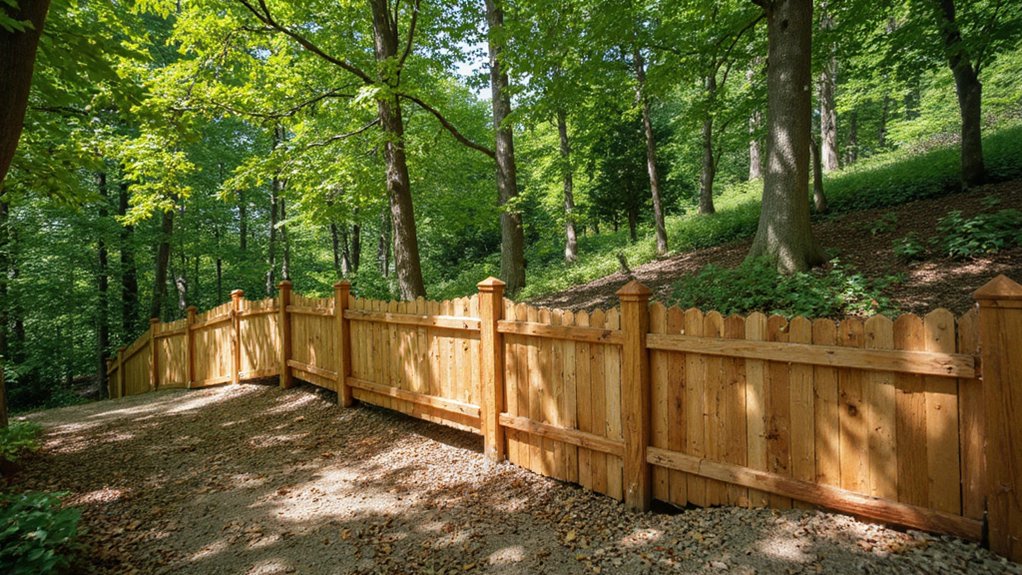
Two main techniques are used on sloped yards, and each has its place.
The step-down method keeps fence sections level. Each panel drops slightly lower than the last. This creates a structured look that works well with privacy fencing.
The racked method angles the fence to match the slope. This keeps the bottom edge closer to the ground and reduces gaps. It works best on gradual slopes.
Choosing between the two depends on slope steepness, fence style, and visual preference. Some yards even use a mix of both methods in different sections.
Tools and Materials Needed for Sloped Fence Installation
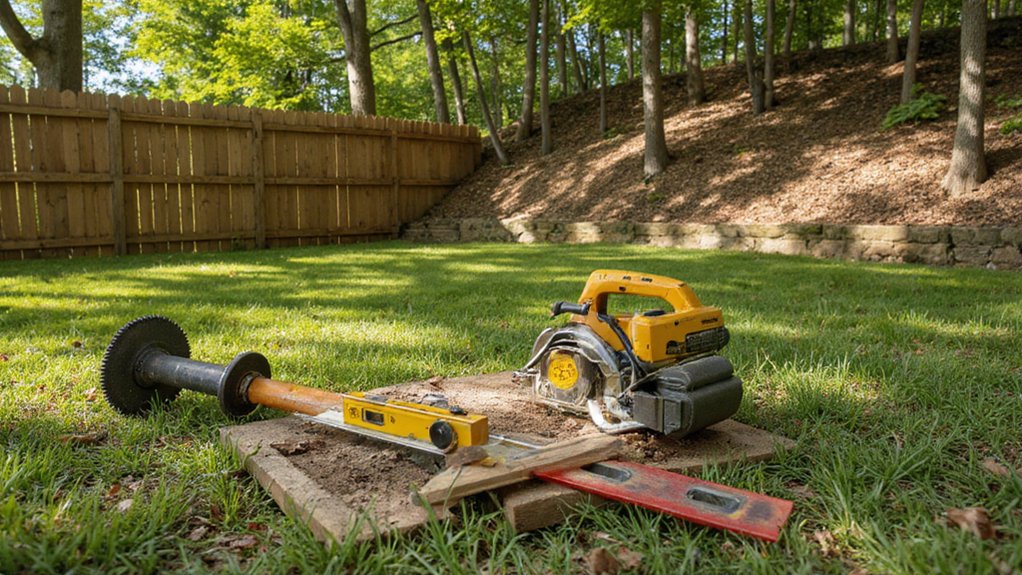
Proper tools make uneven ground easier to manage. Having everything ready before starting saves time and frustration.
Essential Tools Required
A post hole digger or auger is necessary for consistent hole depth. A long level helps with post alignment across height changes. Measuring tape keeps spacing accurate.
A saw is needed for trimming rails or boards. A hammer or nail gun secures components. Shovels help with soil adjustments, while a wheelbarrow moves gravel or concrete efficiently.
Each tool plays a role in keeping the installation clean and controlled.
Recommended Materials Overview
Pressure-treated wood handles ground contact well and resists decay. Vinyl systems built for sloped installation offer clean lines with minimal upkeep. Composite materials balance durability and appearance.
Concrete or gravel strengthens post bases, especially in areas where water runoff is present. Fasteners should be rated for outdoor use to prevent corrosion.
Choosing materials designed for outdoor conditions reduces future repairs.
Safety Equipment Considerations
Working on a slope increases the chance of slips and strains. Gloves protect hands during digging and lifting. Sturdy footwear improves traction on loose soil.
Eye protection shields against debris. Knee pads help when working close to the ground. On steeper sections, a harness adds peace of mind.
Safety gear may feel optional, but it prevents injuries that slow projects down.
Tips for Keeping Your Fence Level on Uneven Ground
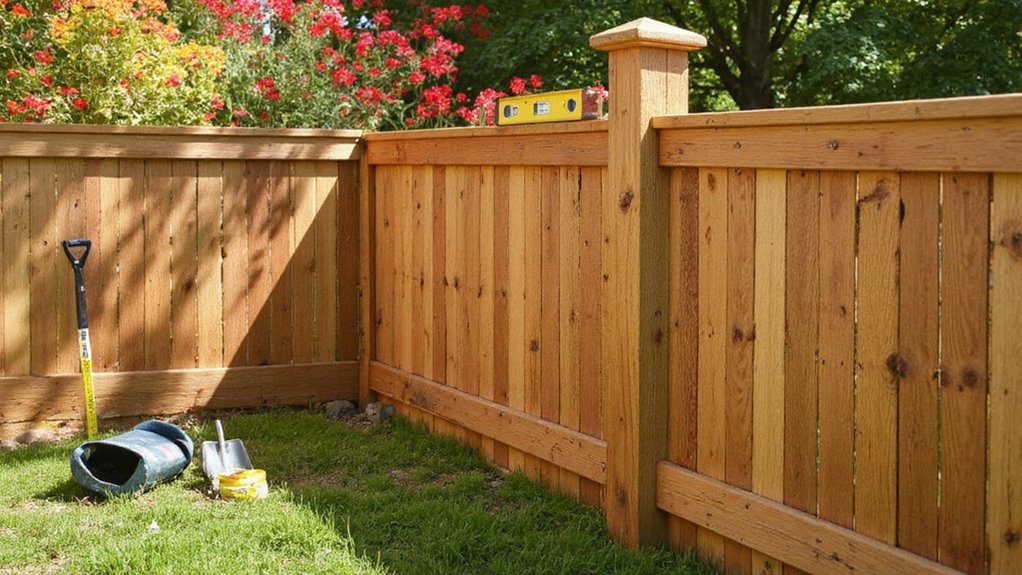
Level fences start with consistent reference points. A string line stretched between posts provides a visual guide. Measuring each section before securing it prevents uneven transitions.
Digging deeper holes on high spots balances post height. Stepped designs help manage larger drops without forcing panels into awkward angles.
Checking alignment often keeps small issues from becoming noticeable flaws. Taking extra time during setup saves rework later.
Top 5 Mistakes to Avoid When Installing a Fence on a Slope
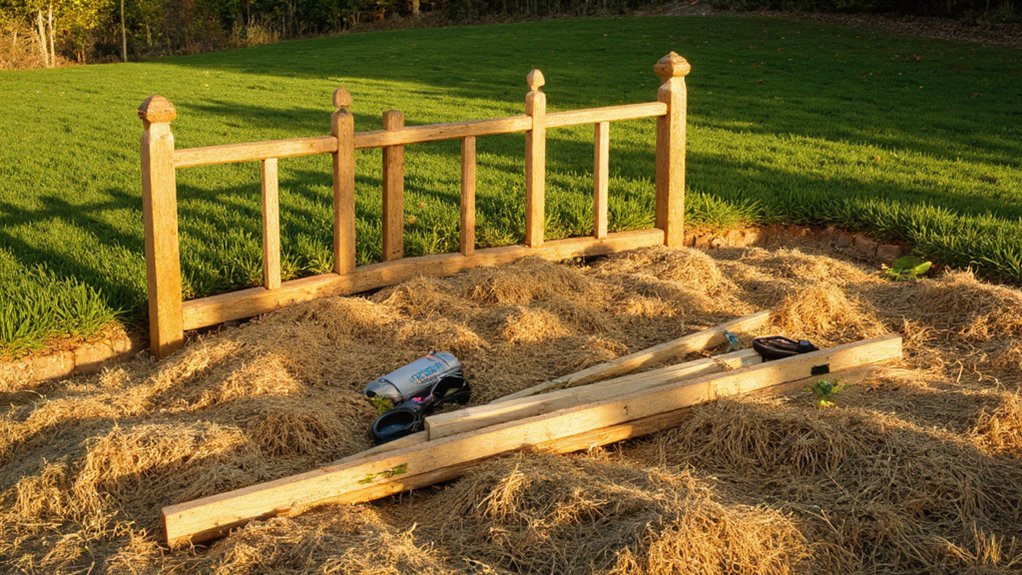
One common mistake is skipping detailed measurements. Slopes exaggerate small errors.
Another issue is choosing a fence style that cannot adapt to the terrain. Not every panel system supports raking or stepping.
Poor post depth causes leaning as soil shifts. Inconsistent spacing creates gaps or overlap. Ignoring drainage leads to erosion around posts.
Avoiding these issues keeps the fence stable and visually balanced.
Maintenance Tips for Fences on Sloped Yards
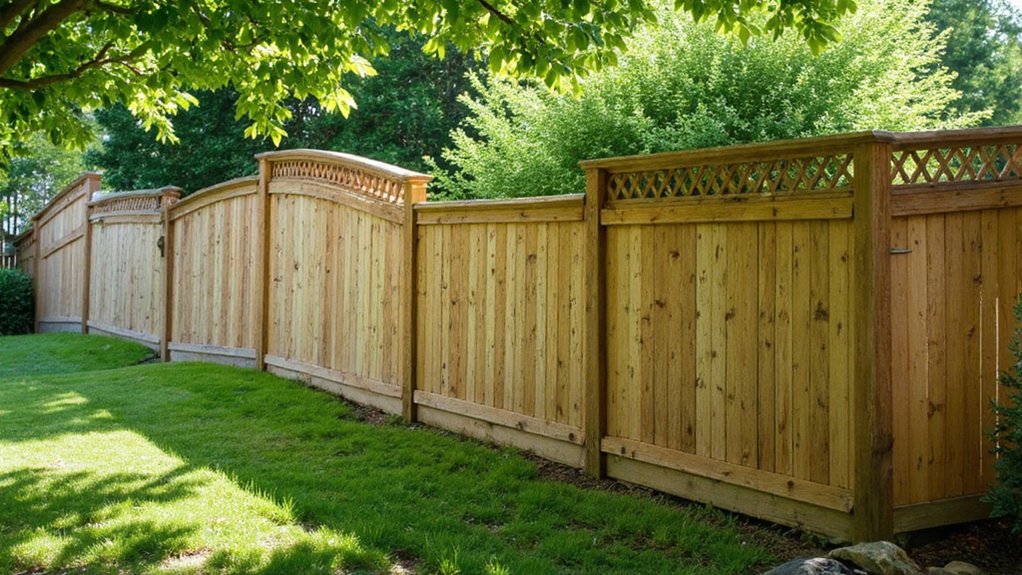
Fences on slopes benefit from routine checks. Look for signs of movement near post bases. Tighten fasteners if sections loosen.
Clear debris that collects along the fence line. Trim plants that push against panels. Watch for moisture buildup after heavy rain.
Applying sealant on wood fences adds protection. Seasonal inspections help catch small problems before they grow.
Frequently Asked Questions
Can I Use a Pre-Fabricated Fence on a Sloped Yard?
Yes. Many pre-made systems support stepped or raked layouts. Check specifications before purchasing.
How Deep Should Fence Posts Be in Uneven Terrain?
Posts are often set at least two feet deep. Deeper holes may be needed on slopes with loose soil.
Will a Fence on a Slope Affect My Property Value?
A well-installed fence can improve curb appeal. Poor installation can have the opposite effect.
What Permits Are Needed for Fencing on a Slope?
Permit rules vary by location. Local offices can confirm height and placement rules.
How Do I Handle Drainage Issues With a Sloped Fence?
Grading, gravel, and drainage channels help move water away from posts and reduce erosion.
Conclusion
Installing a fence on a sloped or uneven yard takes planning, patience, and the right approach. By understanding the land, selecting suitable materials, and choosing an installation method that works with the slope, you can build a fence that looks intentional and stays secure.
Slopes do not have to limit your options. With careful preparation and regular upkeep, your fence can follow the terrain while still providing privacy, safety, and structure for years to come.