
Chain link fences are a practical choice for residential yards, commercial properties, gardens, and industrial spaces. They’re affordable, provide clear visibility, and can last for many years with proper care. But like other metal structures, they can develop rust over time.
Rust often starts as a few small spots on the metal surface. Left untreated, it can spread, weaken the wire, and eventually affect the fence’s ability to provide proper security. Moisture, damaged coatings, poor drainage, and exposure to road salt can all contribute to corrosion.
The good news is that rust doesn’t always mean you need a new fence. With regular inspections, suitable protective coatings, and timely repairs, you can keep many chain link fences in good condition for years.
Let’s look at the common warning signs, what causes rust, and how to prevent or repair it before the damage spreads.
Key Takeaways
- Rust usually appears as reddish-brown spots, flaky patches, or rough areas on chain link fencing.
- Moisture, scratches, damaged protective coatings, and poor drainage are common causes of corrosion.
- Checking your fence every six months can help you catch rust before it spreads.
- Removing loose rust and applying a rust-inhibiting primer can help protect affected areas.
- Protective coatings, proper drainage, and trimmed vegetation can reduce future rust problems.
- Severely corroded wires, posts, and fittings may need replacement rather than surface treatment.
Signs Your Chain Link Fence Is Rusting
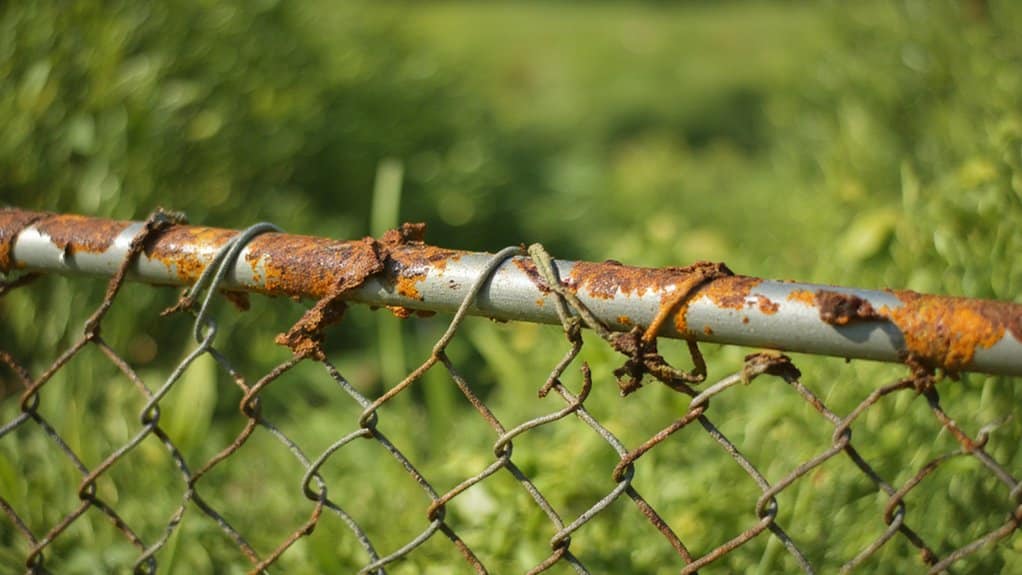
Rust doesn’t usually appear across an entire chain link fence overnight. It often begins in small areas that are easy to overlook during everyday use.
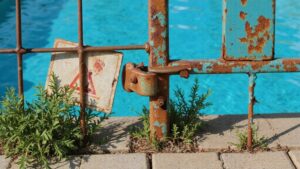
One of the earliest warning signs is a reddish-brown stain on the metal. You might notice a few spots around the wire intersections, along the bottom of the fence, or near the posts. These marks can become darker and spread if the metal remains exposed to moisture.
Pay attention to changes in the fence’s surface, too. Areas that once felt smooth may become rough or develop a flaky texture. This can indicate that the protective coating has worn away and corrosion has started underneath.
Other signs include:
- Peeling or flaking metal: Rust can cause the surface to break down, leaving loose particles behind.
- Small holes: Advanced corrosion may eat through individual wire strands.
- Weak or loose sections: Rust-damaged wires may lose strength and begin to sag.
- Discoloration near joints: Connections and fittings can collect moisture, making them common places for corrosion.
- Damaged bottom sections: Metal close to the ground is often exposed to standing water, wet soil, and debris.
Take a closer look at the fence after heavy rain or during periods of high humidity. These conditions can make existing rust easier to spot.
If you find a small affected area, deal with it before it spreads. Surface rust is usually easier to treat than corrosion that has already weakened the wire.
Common Causes of Chain Link Fence Rust
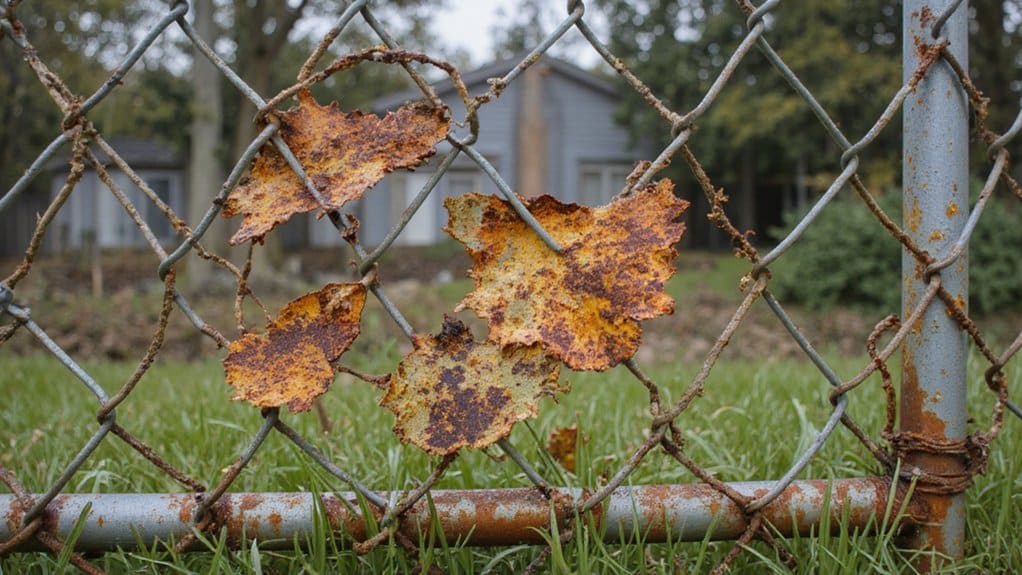
Chain link fences are often made from galvanized steel or coated metal. These materials are designed to resist corrosion, but their protective layers can wear down over time.
Once moisture reaches the exposed steel, rust can begin to form. Several everyday conditions can speed up this process.
Moisture and Humidity
Water is one of the main reasons metal fences develop rust. Rain, morning dew, and humid air can leave moisture on the surface for extended periods.
Fences in damp climates may experience corrosion sooner than those in dry areas. Shaded sections can also stay wet longer because they receive less direct sunlight.
Over time, repeated exposure can weaken the protective layer and allow rust to spread.
Poor Drainage Around the Fence
Water that collects around fence posts or along the bottom rail can create ongoing moisture problems.
This is common in yards with uneven ground, compacted soil, or areas where rainwater has nowhere to drain. When the lower part of the fence stays wet, corrosion may develop around the posts and wire connections.
Check the ground after rainfall. If water regularly collects near the fence, improving drainage may help prevent further damage.
Scratches and Physical Damage
Chain link fences can get scratched by gardening tools, lawn equipment, pets, or everyday activity.
Even a small scratch can expose the steel underneath its protective coating. Once that happens, moisture and oxygen can reach the metal and start the rusting process.
Check areas near gates, corners, and places where equipment or other objects regularly come into contact with the fence.
Worn or Damaged Protective Coatings
Galvanized and vinyl-coated chain link fences have protective layers that help shield the metal from moisture.
These coatings don’t last forever. Age, weather exposure, physical contact, and poor installation can cause them to crack, peel, or wear away.
When the coating is damaged, the exposed metal becomes more vulnerable to corrosion. Regular checks can help you spot these areas before rust spreads.
Road Salt and Coastal Conditions
Properties near the coast or busy roads may face additional corrosion risks.
Salt in the air can settle on metal surfaces near beaches and coastal areas. During winter, road salt and de-icing products can also reach nearby fences through splashing water and runoff.
Salt can speed up corrosion, especially when it remains on the fence for long periods. Washing away accumulated residue with clean water can help reduce this risk.
Effective Strategies to Prevent Chain Link Fence Rust
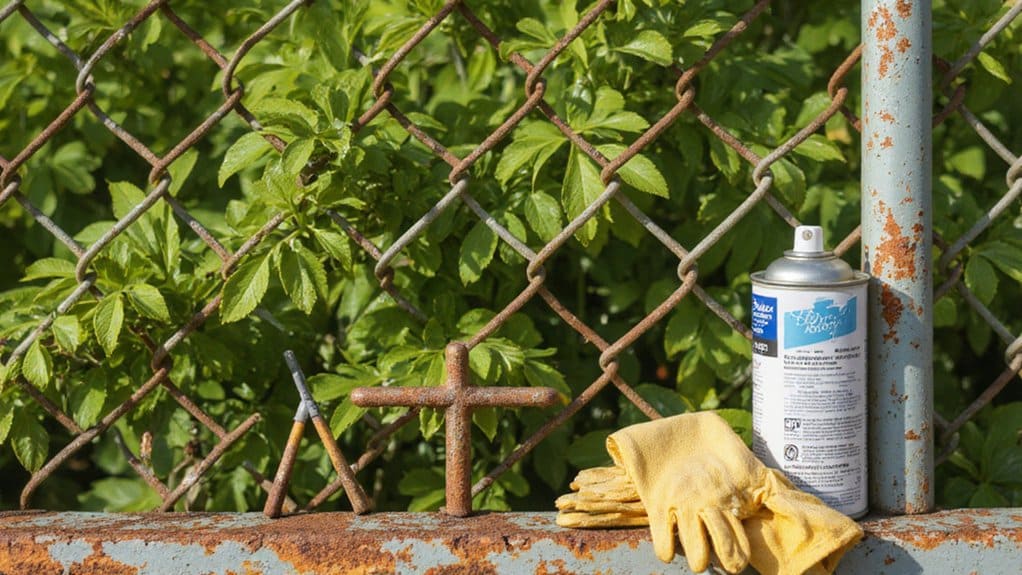
Preventing rust doesn’t require complicated maintenance. A few regular checks and some attention to the fence’s protective coating can make a real difference.
The aim is to keep moisture from collecting, protect exposed metal, and repair minor damage before it spreads.
Regular Fence Inspections
Try to inspect your chain link fence every six months. You may also want to check it after storms, heavy rainfall, or other events that could damage the coating.
Walk along the entire fence line and look closely at the wire, posts, connectors, and gate hardware.
Pay extra attention to:
- Areas where wires cross or connect.
- The bottom of the fence, especially near soil or grass.
- Post bases and concrete connections.
- Scratched or peeling sections.
- Areas that remain shaded or damp.
If you notice rust, remove loose particles and treat the affected area before corrosion spreads.
Keeping a simple record of damaged sections can also help you monitor changes between inspections.
Keep Vegetation Away From the Fence
Plants, grass, and climbing vines can trap moisture against chain link fencing.
When leaves and branches remain in contact with the metal, airflow becomes limited. Wet vegetation can also hold moisture against the protective coating.
Trim grass along the bottom of the fence and remove vines that grow through the wire. Keep shrubs and other plants far enough away to allow air to circulate.
This also makes it easier to inspect the fence and spot early signs of rust.
Apply Protective Coatings
Protective coatings help keep water and oxygen away from exposed steel. The right product depends on the fence material and its existing finish.
Common options include:
Galvanization: This process uses a zinc coating to protect steel from corrosion. Many chain link fences are galvanized during manufacturing. If the zinc layer becomes damaged, exposed areas may need suitable treatment.
Powder coating: This finish is applied as a dry powder and cured to create a protective layer. It is often used alongside galvanized steel for added surface protection.
Liquid protective paint: Rust-resistant metal paints can help protect exposed or repaired areas. These products are available in brush-on and spray-on versions.
Before applying any coating, clean the fence and allow it to dry completely. Follow the product instructions for surface preparation, application, and drying times.
Make sure the coating is suitable for galvanized metal if that’s the material you’re treating. Not every paint bonds properly to every metal surface.
Improve Drainage Near Fence Posts
Check whether rainwater collects around the fence posts or along the bottom wire.
If water tends to pool in these areas, consider correcting the ground slope or improving drainage. Remove leaves, soil buildup, and other debris that can hold moisture against the metal.
Good drainage helps keep the fence drier between rainfall and reduces prolonged contact with wet soil.
Repairing Rust Damage on Chain Link Fences
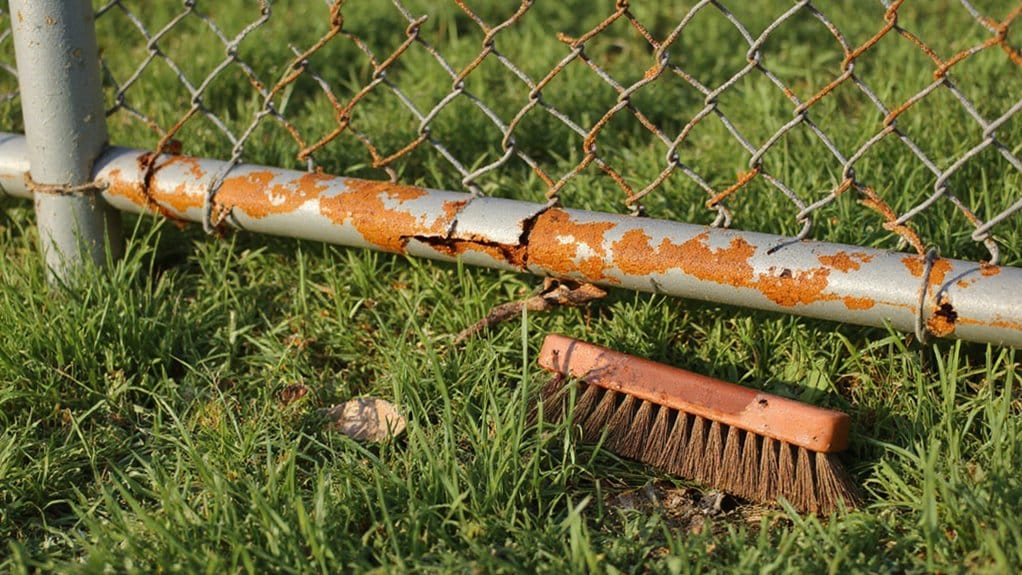
Finding rust doesn’t always mean the fence needs to be replaced. Small patches of surface corrosion can often be treated with cleaning and protective products.
The right repair method depends on how far the rust has spread and whether the metal has lost its strength.
Assess the Extent of Rust Damage
Before starting any repair, inspect the affected area carefully.
Look for reddish-brown patches, peeling coatings, rough surfaces, and loose rust particles. Check the surrounding wires as well, since corrosion may extend beyond the area where discoloration is visible.
A wire brush can help remove loose rust, but avoid aggressive scrubbing that could damage the remaining protective coating.
Look for deeper problems, such as:
- Holes in the chain link wires.
- Broken or badly weakened strands.
- Bent or damaged fence sections.
- Corroded connectors and tension bands.
- Posts that have become unstable near ground level.
Minor surface rust may only need cleaning and a suitable protective treatment. Wires with holes or serious corrosion usually need replacement.
If a fence post has become unstable or the damage affects a large section, consider getting help from a fence contractor before attempting repairs.
Clean and Prepare the Affected Surface
Proper cleaning helps protective products bond to the metal.
Start by removing dirt, loose rust, and flaky coating with a wire brush or suitable sandpaper. Work carefully so you don’t damage the surrounding metal or remaining finish.
For stubborn corrosion, use a commercial rust remover that is suitable for the fence material. Follow the manufacturer’s instructions and wear suitable gloves and eye protection.
Avoid mixing household cleaning products. Vinegar and baking soda are sometimes suggested for rust removal, but they aren’t a guaranteed treatment for every type of corrosion or protective coating.
Once cleaning is complete, rinse the area if the product instructions call for it. Let the metal dry fully before applying primer or paint.
Check the surface again. If loose rust remains, repeat the cleaning process where needed.
Apply a Rust-Inhibiting Primer
After removing loose corrosion, apply a primer designed for the type of metal you’re treating.
A rust-inhibiting primer helps protect exposed steel and prepares the surface for a finishing coat.
Use a small brush for narrow sections, wire intersections, and other areas that are difficult to reach. A suitable spray product may also work, provided it can be applied safely and evenly.
Allow the primer to dry according to the manufacturer’s directions. Applying paint too early can affect how well the coating bonds to the surface.
Finish With Rust-Resistant Paint
Once the primer has dried, apply a compatible rust-resistant paint or metal coating.
Epoxy-based and polyurethane-based products are options for some metal surfaces, but always check whether the product is suitable for galvanized steel and outdoor use.
Apply thin, even coats instead of trying to cover everything in one thick layer. Make sure you reach the wire intersections, edges, and joints where moisture can collect.
Follow the recommended drying time between coats. Check the finished area after it has cured to make sure the metal is fully covered.
Remember that paint can protect sound metal, but it cannot restore strength to a wire that has already corroded through.
When a Chain Link Fence Needs Replacement
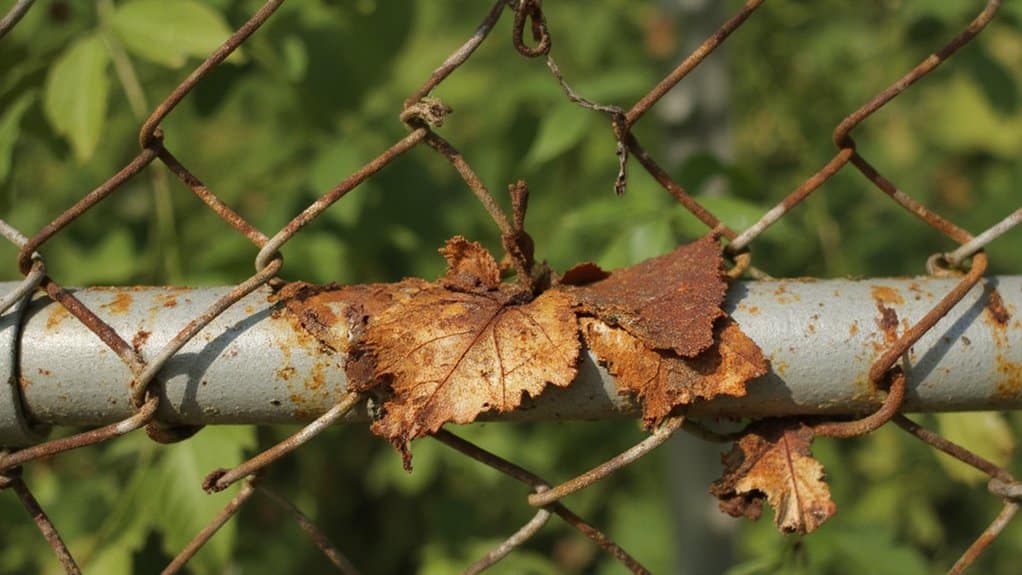
Some rust problems are too advanced for surface treatment. Knowing when to replace damaged sections can help prevent safety and security problems.
Start by looking at the overall condition of the fence. A few rusty spots may be manageable, but widespread corrosion across the wires, posts, and connections can indicate deeper deterioration.
Watch for these warning signs:
- Widespread rust: Corrosion covers several sections rather than appearing in isolated spots.
- Broken wires: Individual strands have snapped or developed holes.
- Unstable posts: Posts move, lean, or show severe corrosion near the ground.
- Loose fence sections: The mesh no longer holds its shape or tension.
- Repeated repairs: The same areas keep developing rust or other damage.
Chain link fences often last around 15 to 20 years, though actual lifespan depends on the material, coating, weather, installation, and maintenance.
A well-maintained galvanized fence may last longer, while one exposed to coastal air or road salt may need attention sooner.
You don’t always have to replace the entire fence. If the posts and most of the mesh are still in good condition, replacing damaged sections may be enough.
When corrosion affects several posts or large areas of mesh, compare the cost of repeated repairs with the cost of installing a new fence.
If your existing fence has extensive corrosion or structural damage, professional fence installation in Sooke can help you replace it with a new fencing system suited to your property.
Long-Term Maintenance for Chain Link Fences
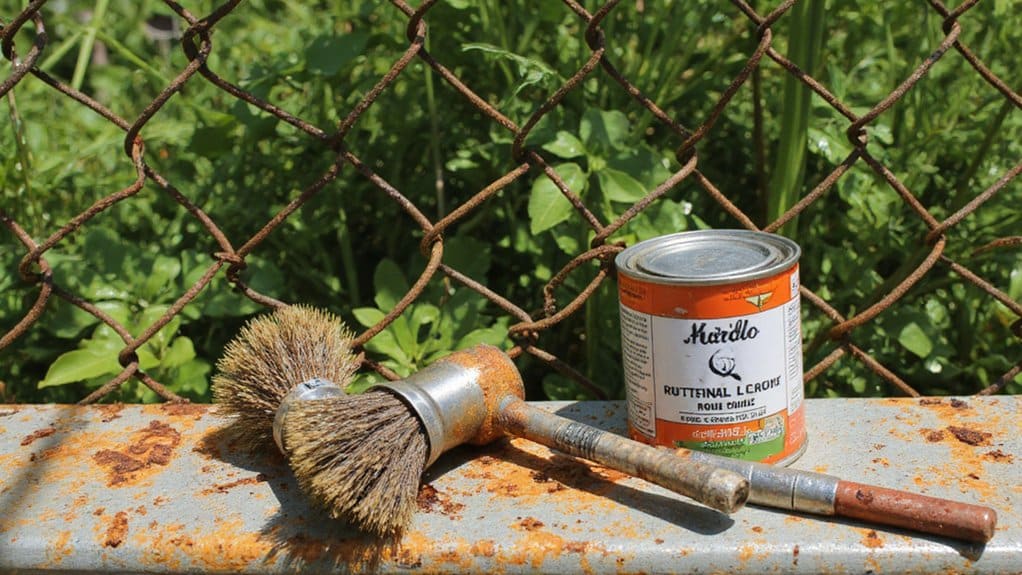
A simple maintenance routine can help prevent small rust problems from becoming larger repair jobs.
You don’t need to spend hours working on your fence every month. A few scheduled checks and occasional cleaning can keep the metal in better condition.
Use this maintenance routine as a starting point:
Inspect the fence twice a year. Look for rust, scratches, loose wires, damaged coatings, and unstable posts. Pay close attention to areas near the ground and around gates.
Clean away dirt and debris. Wash the fence at least twice a year, especially if it collects mud, leaves, or salt residue. Clean water and a soft brush are usually enough for routine cleaning.
Check the protective coating. Look for peeling paint, worn galvanization, and exposed metal. Treat damaged areas with products made for the fence material.
Trim nearby plants. Keep grass, vines, and shrubs from pressing against the fence. This allows better airflow and reduces moisture buildup.
Check gates and fittings. Loose hinges, connectors, and tension bands can affect how the fence works. Tighten or replace damaged fittings when needed.
Watch the drainage. Remove debris around fence posts and correct areas where water regularly collects.
Keep a record of repairs. Write down when you cleaned, painted, or replaced damaged sections. This makes it easier to spot recurring problems and plan future maintenance.
The amount of care your fence needs will depend on local weather and the surrounding environment. Fences near the coast, in humid regions, or close to salted roads may need more frequent cleaning and inspections.
Frequently Asked Questions
How Long Does It Take for Rust to Develop on a Chain Link Fence?
Rust can begin forming within six months to two years, depending on moisture exposure, weather, and the condition of the protective coating.
A galvanized or properly coated fence may resist corrosion for much longer. Scratches, standing water, and salt exposure can shorten that period.
Regular inspections help you catch early signs before the affected areas become harder to repair.
Can I Paint Over Rust on My Chain Link Fence?
You can paint a rusty chain link fence, but painting directly over loose rust isn’t a good idea.
Start by removing flaky rust and cleaning the surface. Apply a rust-inhibiting primer, then use an outdoor metal paint that is suitable for the fence material.
If the wires have holes or have become weak, painting won’t repair the damage. Those sections need to be replaced.
What Materials Work Well for Rust Prevention?
Galvanized steel is commonly used for chain link fencing because its zinc coating helps protect the underlying metal.
Powder-coated finishes and suitable outdoor metal paints can offer added protection. Epoxy and polyurethane coatings may also work on certain surfaces.
Check the product label before applying anything to galvanized wire. The coating should be suitable for outdoor exposure and compatible with the existing finish.
How Do Weather Conditions Affect Chain Link Fence Rust?
Humidity, rainfall, and temperature changes can all contribute to corrosion.
High humidity allows moisture to remain on the metal. Temperature changes can also create condensation, especially in shaded areas.
Coastal air and road salt add another concern because salt can speed up the corrosion process.
Cleaning the fence, improving drainage, and repairing damaged coatings can help limit these effects.
Are There Products Made for Chain Link Fence Maintenance?
Yes. Several types of products are available for cleaning and protecting metal fencing.
These include rust removers, wire brushes, rust-inhibiting primers, galvanized metal repair coatings, and outdoor metal paints.
Choose products according to the fence material and the condition of its existing finish. Follow the manufacturer’s directions for preparation and application.
Keeping Your Chain Link Fence in Good Condition
Rust is a common problem with metal fencing, but it doesn’t always mean the fence has reached the end of its life.
Small rust patches can often be treated with careful cleaning, primer, and a suitable protective coating. Regular inspections also make it easier to spot scratches, worn finishes, and moisture problems before they spread.
Pay attention to the areas around posts, joints, and the bottom of the fence, since these places can collect water and debris. Keep vegetation trimmed, maintain proper drainage, and clean away dirt or salt when needed.
If the wires have corroded through or the posts have become unstable, replacing the damaged sections is usually a better option than covering them with paint.
With a little regular care, your chain link fence can remain sturdy, functional, and presentable for many years.