Maintaining your pool fence plays an important role in keeping the area around your pool safe and in good condition. Small problems such as rust, loose panels, or a gate that doesn’t close properly can be easy to overlook. Left alone, though, they can become bigger concerns.
A quick inspection can help you spot these issues before they affect the fence or create a safety hazard. Take a few minutes to look over the fence, check the posts and panels, and test the gate. These simple checks can help you catch wear early and avoid more involved repairs later.
Key Takeaways
- Check your pool fence regularly for rust, corrosion, loose fittings, and damaged sections.
- Look for gaps, leaning panels, or loose posts that could affect pool safety.
- Test the gate to make sure it opens freely, closes fully, and latches securely.
- Deal with visible damage as soon as possible instead of letting it spread.
- Consider a professional inspection if the fence is unstable or has major damage.
Why Regular Pool Fence Maintenance Matters
A pool fence does more than mark the edge of the pool area. It acts as a physical barrier, so its condition matters. Rust, damaged panels, loose posts, or a faulty gate can reduce how well the fence does its job.
Regular maintenance also helps keep the fence looking tidy. Dirt, weather exposure, and moisture can gradually affect its appearance, while untreated rust can spread across metal surfaces.
A simple inspection can reveal problems before they become harder to fix. Look over the panels, posts, fasteners, hinges, and latch. If something looks loose, bent, cracked, or worn, deal with it early.
What to Watch For in Your Pool Fence?
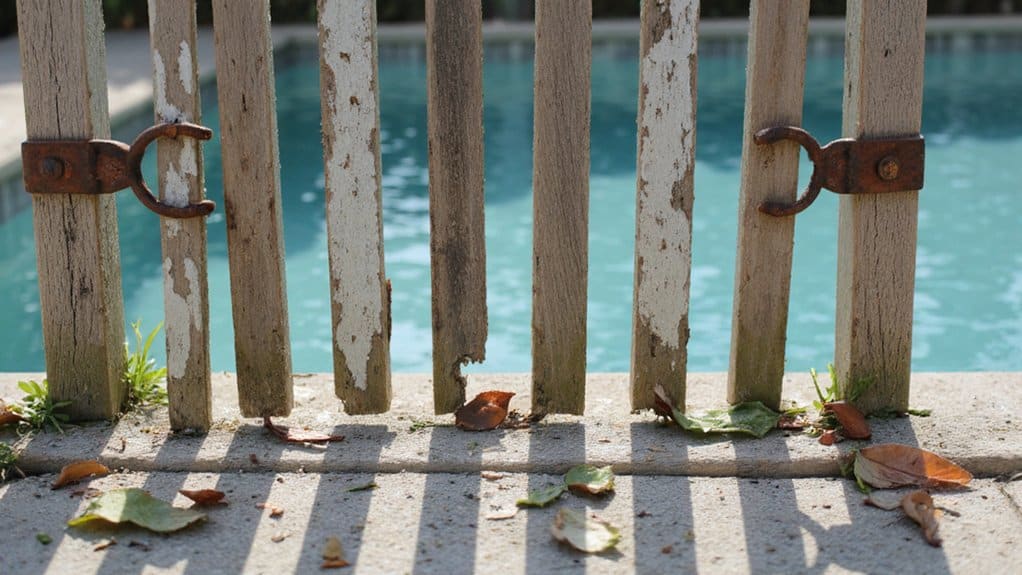
When checking your pool fence, pay close attention to a few areas.
Rust and corrosion can weaken metal over time, especially around joints, welds, and places where moisture collects. Loose or damaged panels can also create gaps or leave sections of the fence unstable.
The gate deserves extra attention. It should swing freely, close completely, and latch securely every time. A gate that sticks, stays partly open, or fails to latch needs to be checked rather than ignored.
Rust and Corrosion Issues
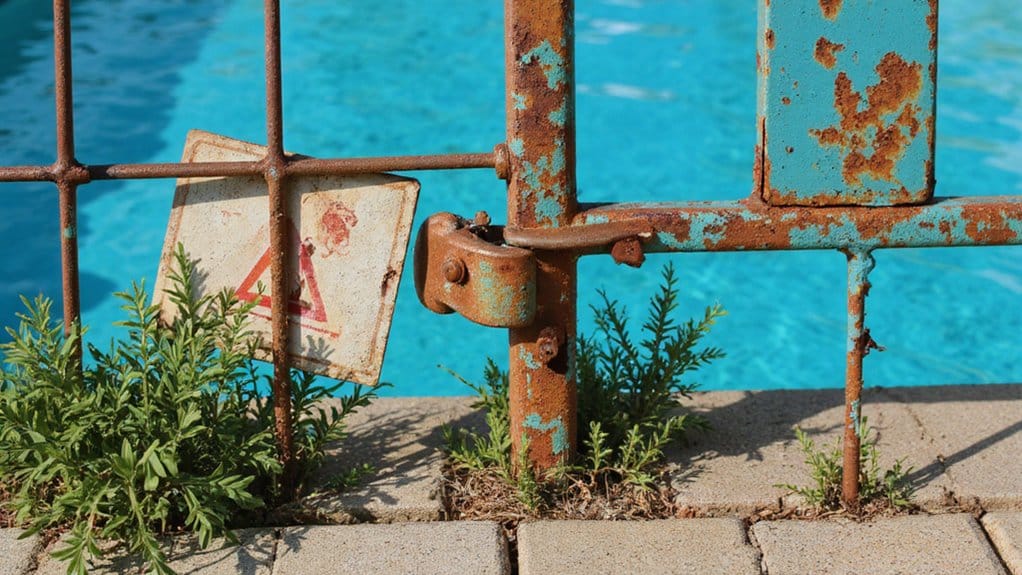
Rust can start with a small patch of discoloration and gradually spread across a metal fence. Look for flaking paint, rough surfaces, orange or brown spots, and small pits in the metal.
Pay close attention to the lower parts of the fence, joints, welds, and other areas where water may collect. These spots can stay damp for longer periods and may show rust sooner than exposed surfaces.
If you find surface rust, clean the affected area and treat it before it spreads. Depending on the condition of the fence, this may involve removing loose rust, applying a rust treatment or primer, and repainting the area.
A protective coating can also help reduce exposure to moisture. Keep an eye on previously treated areas during later inspections so you can deal with new rust early.
Loose or Damaged Panels
Loose or damaged panels can affect both the condition and safety of your pool fence. Walk along the fence and check whether each panel sits firmly in place.
Look for panels that have shifted, bent, cracked, or pulled away from their supports. Misalignment can also create openings that shouldn’t be there, especially if a panel has moved away from the next section.
Loose screws, bolts, or other fasteners may be all that’s needed to correct a minor problem. Tighten them carefully and check the panel again. A panel that is badly bent or damaged may need to be replaced.
When replacing a section, use a suitable replacement that fits the existing fence properly. A poor fit can leave gaps or put extra strain on nearby sections.
Gate Functionality Concerns
The gate is one of the most important parts of a pool fence, so don’t treat it as an afterthought. Open and close it several times during an inspection and pay attention to how it moves.
A gate that drags, sticks, or doesn’t sit squarely may have an alignment problem. The hinges may also be loose or worn.
Check the latch carefully. It should engage properly and hold the gate closed without needing to be forced into position. If the latch doesn’t catch consistently, the problem needs attention.
Simple adjustments, tightening, or suitable lubrication may help with minor issues. If the gate remains difficult to close or latch, a repair or replacement part may be needed.
The Dangers of Rust and Decay in Metal Fences
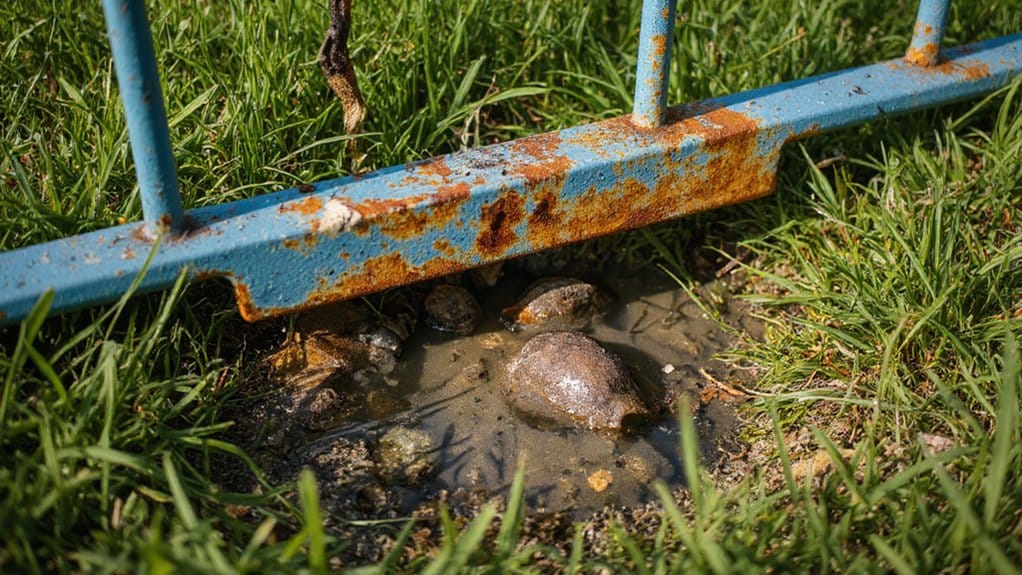
Rust can do more than change the appearance of a metal fence. When corrosion continues unchecked, it can weaken the affected area and eventually damage the fence itself.
Moisture is one of the main things to watch for. Areas that stay damp, collect dirt, or don’t dry quickly can be more prone to corrosion.
If you find rust, remove loose material and clean the affected surface before applying an appropriate rust treatment. Severely corroded sections may need more extensive repair or replacement.
A protective coating or suitable exterior paint can help protect cleaned metal from moisture. Regular inspections are still needed, since coatings can wear down over time.
Don’t ignore rust just because the affected area looks small. Catching it early can make the repair much simpler.
Identifying and Fixing Structural Instability
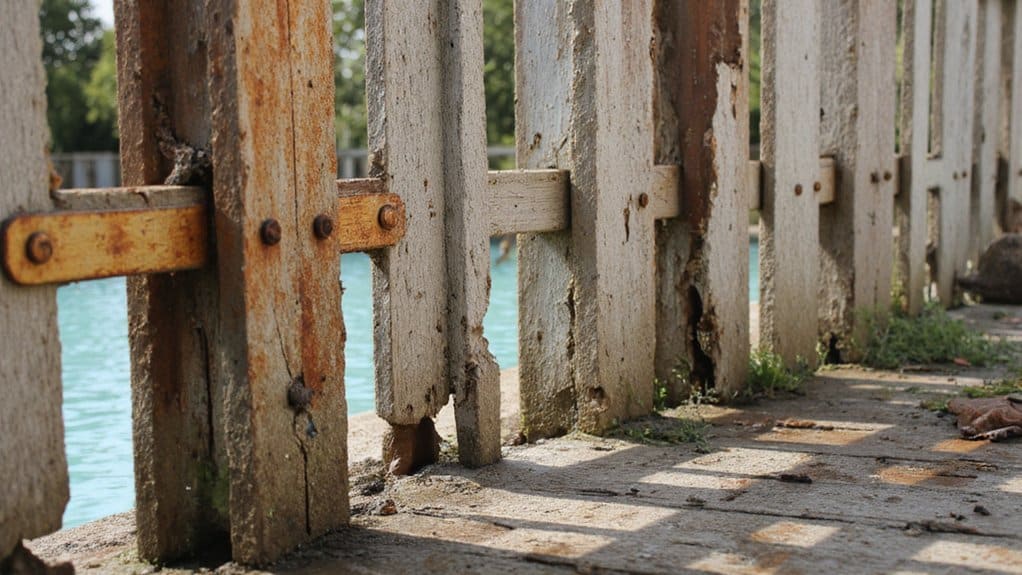
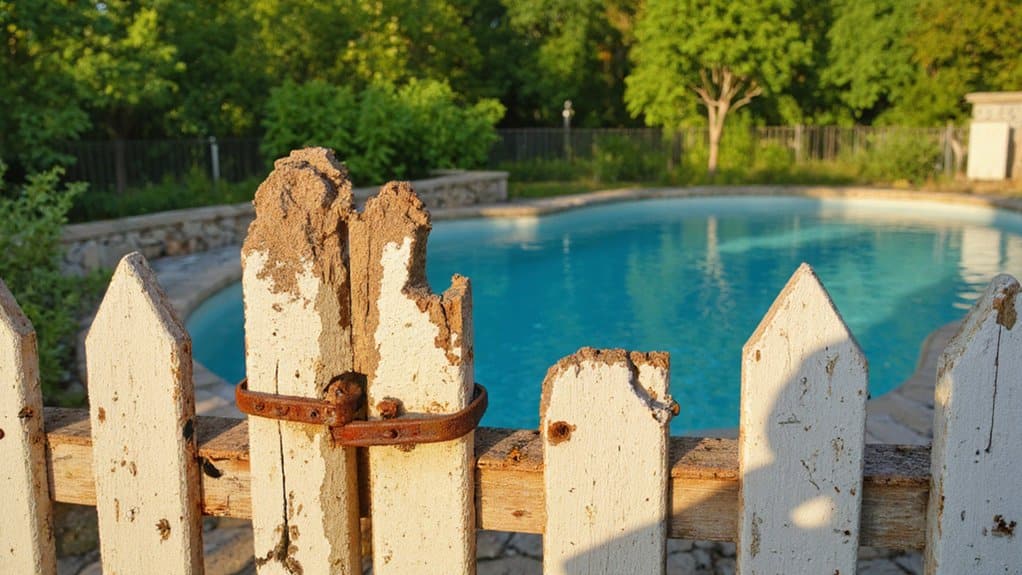
A pool fence should feel stable when you inspect it. Loose posts, leaning sections, sagging panels, and movement at the base can all point to a problem that needs attention.
Start by checking the posts. Look for movement where they meet the ground and inspect the surrounding area for cracks, gaps, or signs that the post has shifted.
Next, look along the panels. A section that is noticeably lower, tilted, or out of line may need adjustment or repair.
Some minor problems can be corrected by tightening fasteners or replacing damaged fittings. More serious instability may require a damaged section to be replaced or the post to be secured again.
If the fence continues to move after a basic repair, don’t keep forcing the same fix. A professional inspection can help determine what is causing the instability and what needs to be repaired.
Pool Fence Maintenance: Focusing on Gates and Safety
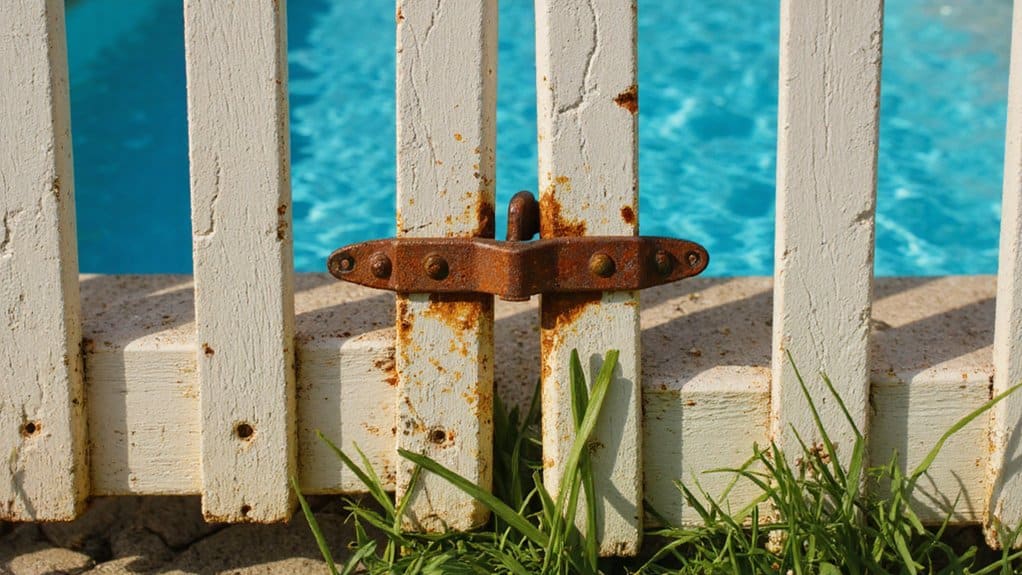
Give the gate a separate check during routine pool fence maintenance. The gate should open without unnecessary resistance, close fully, and latch securely.
Check the locking or latching mechanism for signs of wear. If the latch is loose, difficult to operate, or no longer holds the gate closed properly, it may need adjustment or replacement.
Also inspect the fence around the gate. Movement from regular use can put extra stress on hinges, posts, fasteners, and nearby panels. Rust or other damage in this area should be dealt with promptly.
After making any adjustment, open and close the gate several times. Make sure it returns to the closed position and that the latch catches properly each time.
A gate that works correctly helps maintain a secure barrier around the pool area. It’s worth checking regularly rather than waiting until something stops working.
Seasonal Maintenance Tips for Your Pool Fence
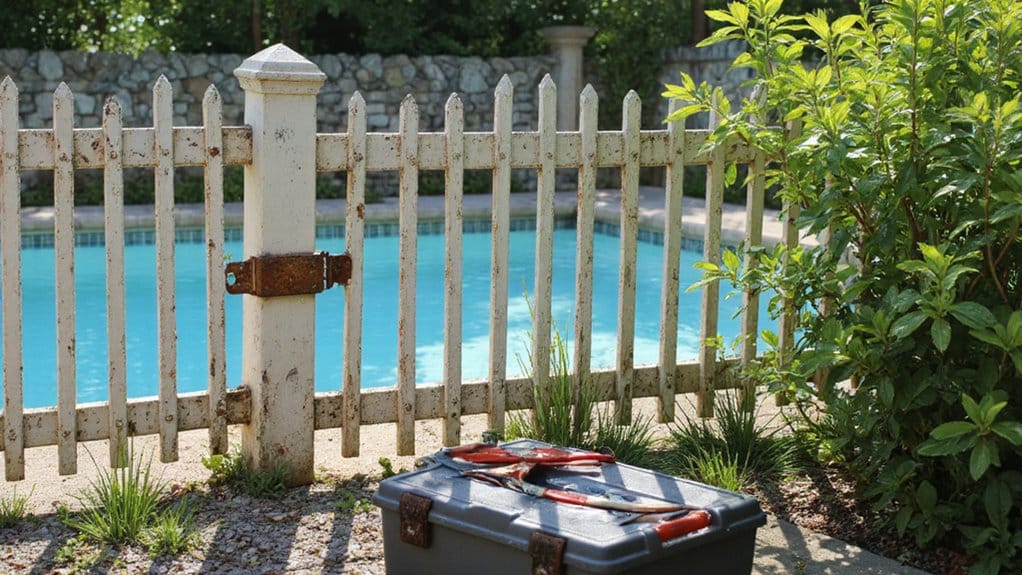
Changes in weather can affect your pool fence over time. Rain, humidity, heat, and general outdoor exposure can contribute to rust, dirt buildup, loose fittings, and other forms of wear.
A seasonal check gives you a chance to look over the fence and deal with small issues before they become harder to manage.
Inspect for Rust Damage
Look closely at the metal surfaces, especially near the ground, joints, welds, hinges, and other areas where moisture can collect.
Signs of rust can include discoloration, flaking paint, rough patches, and small pits in the metal. If you spot these signs, clean the affected area and treat the rust before it spreads.
A monthly check can be useful for catching new problems early. You don’t need to spend a long time on each inspection. Walk around the fence, look closely at the metal, and check for changes from the previous inspection.
A suitable protective coating can also help protect the surface. Follow the product instructions when preparing and treating the fence.
Check Gate Functionality
The gate should be part of every fence inspection, regardless of the season.
Open and close it slowly and listen for unusual sounds. Check whether it swings freely or catches against the ground or fence. Look at the hinges and make sure they remain secure.
Test the latch several times. It should catch properly and hold the gate closed. If the latch is worn, loose, or inconsistent, repair or replace it before the problem becomes worse.
Keep moving parts clean and lubricated where appropriate. Always use a product that is suitable for the hardware and follow the manufacturer’s directions.
Effective Cleaning Techniques to Extend Your Pool Fence’s Life
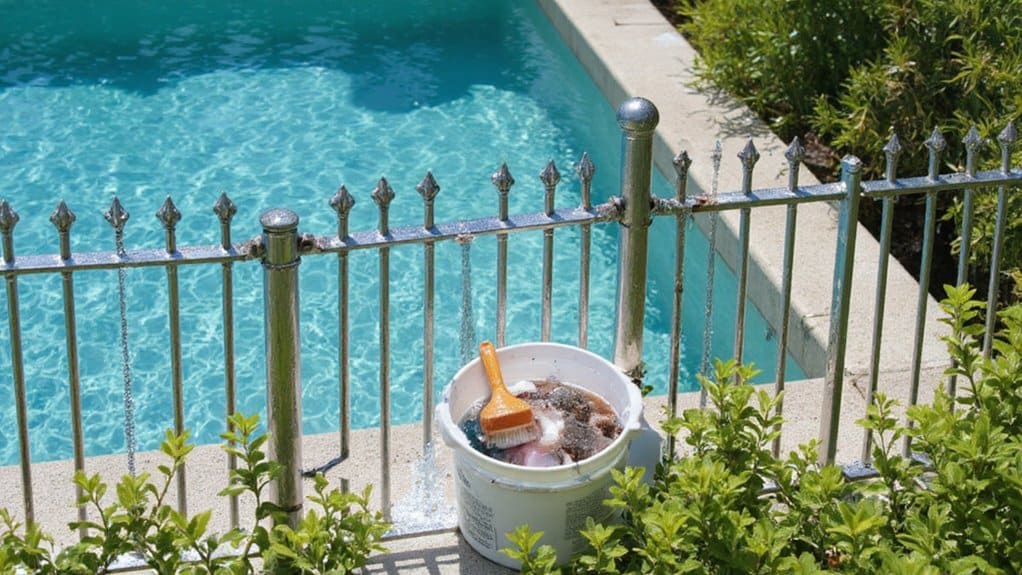
Cleaning your pool fence helps remove dirt, grime, salt, and other buildup that can affect the surface over time. It also gives you a good opportunity to inspect the fence while you’re working.
For routine cleaning, a mild detergent and water are often enough. Use a soft-bristle brush, sponge, or cloth to loosen dirt without unnecessarily scratching the surface.
For stubborn marks, a gentle mixture such as baking soda and water may help. Test any cleaning solution on a small, less visible area before applying it across the fence.
Once you’ve cleaned the fence, rinse it thoroughly with clean water. Drying the surface can also help prevent moisture from sitting in joints and other problem areas.
While cleaning, look for rust, loose fasteners, cracks, damaged panels, or changes in the fence’s alignment. Cleaning and inspection can be done together, making routine maintenance easier to keep up with.
When to Call a Professional for Repairs
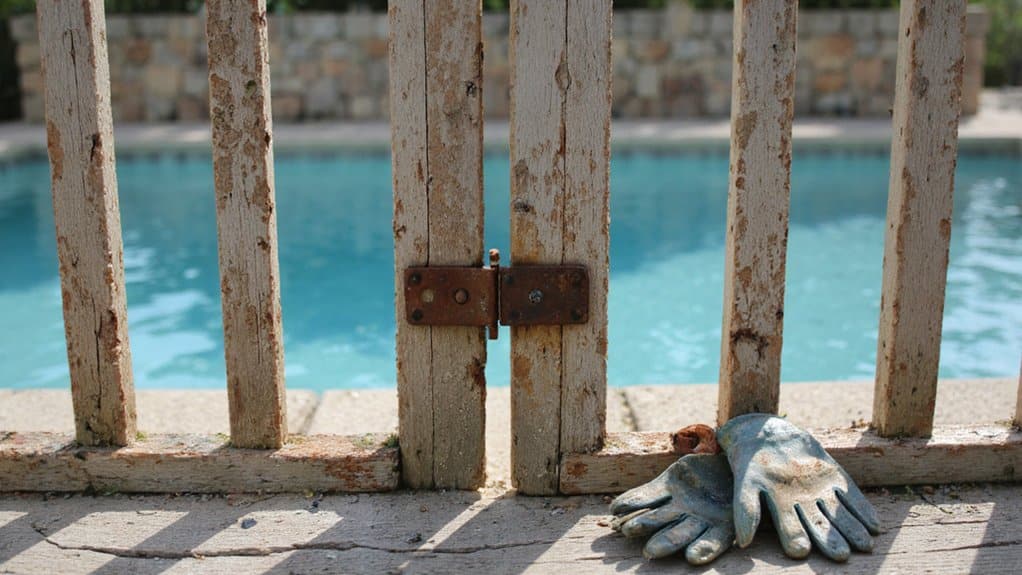
Some pool fence problems are simple to address, while others need a professional assessment.
Call a professional if you find major rust or corrosion, badly damaged panels, unstable posts, broken sections, or a fence that continues to move after basic repairs.
The same applies to a gate that won’t close or latch properly after adjustment. Since the gate is part of the barrier around the pool, it’s not something to leave unresolved.
Gaps and structural movement also deserve prompt attention, especially if they affect the fence’s ability to restrict access to the pool area.
Regular inspections can help you spot these problems early. If you’re unsure whether a repair is safe to handle yourself, having the fence checked by a professional is the safer choice.
If your pool fence has major structural damage or needs to be replaced, professional fence installation may be a better option than attempting a major repair yourself.
Frequently Asked Questions
How Often Should I Inspect My Pool Fence?
A monthly inspection is a good routine for checking your pool fence. Look at the panels, posts, fasteners, gate, hinges, and latch.
You can also take a quick look after severe weather or any event that may have affected the fence. If you notice movement, damage, or a change in how the gate works, inspect the area sooner.
Can I Paint My Pool Fence?
Yes, a pool fence can generally be painted when the material and existing finish allow it. Before painting, clean the surface and remove loose paint or rust.
Choose an exterior paint or coating suited to the fence material and outdoor conditions. Follow the product instructions for surface preparation, application, and drying time.
What Materials Are Best for Pool Fences?
Common pool fence materials include metal, wood, and vinyl. Each has different maintenance needs.
Metal fences may need attention to rust and surface coatings. Wood can require regular cleaning and protection from moisture. Vinyl generally needs cleaning to remove dirt and buildup.
The right choice depends on the existing pool area, local requirements, appearance, and the amount of maintenance you’re prepared to handle.
Are There Local Regulations for Pool Fences?
Yes. Pool fence requirements can vary by location. Rules may cover fence height, openings, gate design, latching systems, and other safety features.
Check the requirements that apply to your area before installing, changing, or replacing a pool fence. If you’re unsure whether an existing fence meets local requirements, ask a qualified local professional or the relevant authority.
How Do I Prevent Algae Growth on My Fence?
Keeping the fence clean and reducing moisture buildup can help limit algae growth. Regularly remove dirt, leaves, and other debris from around the fence.
For pool areas, keeping the water properly maintained can also help reduce buildup on nearby surfaces. Clean the fence with a suitable solution and rinse it thoroughly afterward.
Pay extra attention to shaded or damp areas, since these can stay wet for longer periods.
Conclusion
Regular pool fence maintenance helps you catch small problems before they turn into bigger repairs. Rust, loose panels, unstable posts, damaged fittings, and gate problems are all worth checking during routine inspections.
A monthly inspection, regular cleaning, and seasonal checks can help you keep track of the fence’s condition. Pay close attention to the gate, since it needs to close and latch properly every time.
When damage is extensive or the fence feels unstable, bring in a professional to assess the problem. A little attention throughout the year can help keep the pool area safer and the fence in good condition.