Installing a wood fence on uneven terrain takes more planning than installing one on flat ground. Slopes, changes in elevation, loose soil, and water runoff can all affect how the fence performs over time. If the posts are not positioned and secured properly, sections can shift, lean, or become uneven.
The good news is that uneven ground does not mean you have to give up on a wood fence. With a careful site assessment, the right materials, and an installation method suited to the slope, you can build a fence that looks good and remains stable.
Key Takeaways
- Assess the slope, elevation changes, and soil conditions before starting the installation.
- Use properly sized post holes and concrete to give fence posts a firm base.
- Choose between stepped and contoured fence layouts based on the shape of the land.
- Plan for drainage so water does not collect around the posts.
- Cedar, redwood, and pressure-treated wood can be suitable choices depending on the local conditions.
- Consider professional help when the property has steep slopes, difficult soil, or complicated elevation changes.
How to Install a Wood Fence on Uneven Terrain
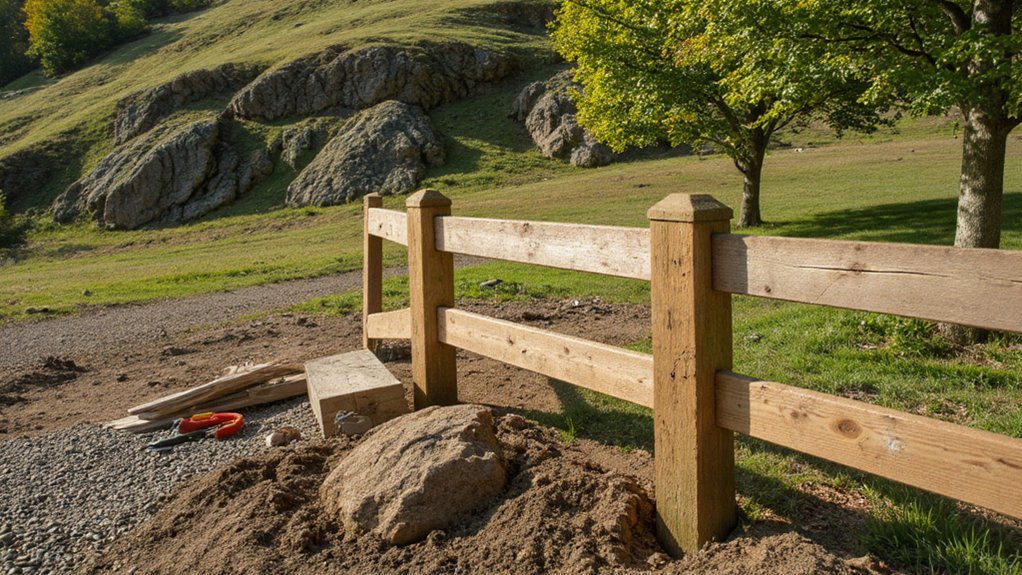
Installing a wood fence on uneven ground starts with understanding how the property changes from one point to another.
Walk the fence line and look for steep areas, low spots, exposed roots, loose soil, and places where rainwater tends to collect. These details can affect where you place the posts and how each fence section should be positioned.
Once you understand the terrain, mark the post locations. Measure the distance between posts carefully and use a level or string line to keep the layout consistent.
For noticeable changes in elevation, a step design can work well. Each fence section stays level, while the next section sits slightly higher or lower to follow the slope. This creates a series of steps along the fence line.
A contour design is another option. Instead of keeping every section level, the rails and pickets follow the natural slope of the property. The right choice depends on the steepness of the land, the fence style, and the look you want.
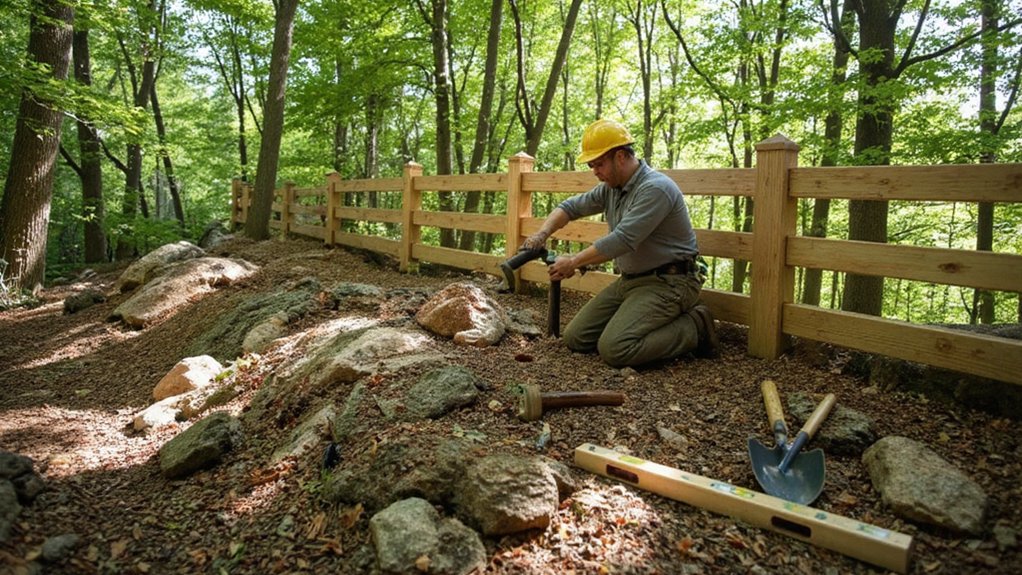
Posts should be set deeply enough for the soil and conditions on the property. Concrete can provide extra support, especially where the ground is sloped or prone to movement.
Understanding the Challenges of Uneven Terrain
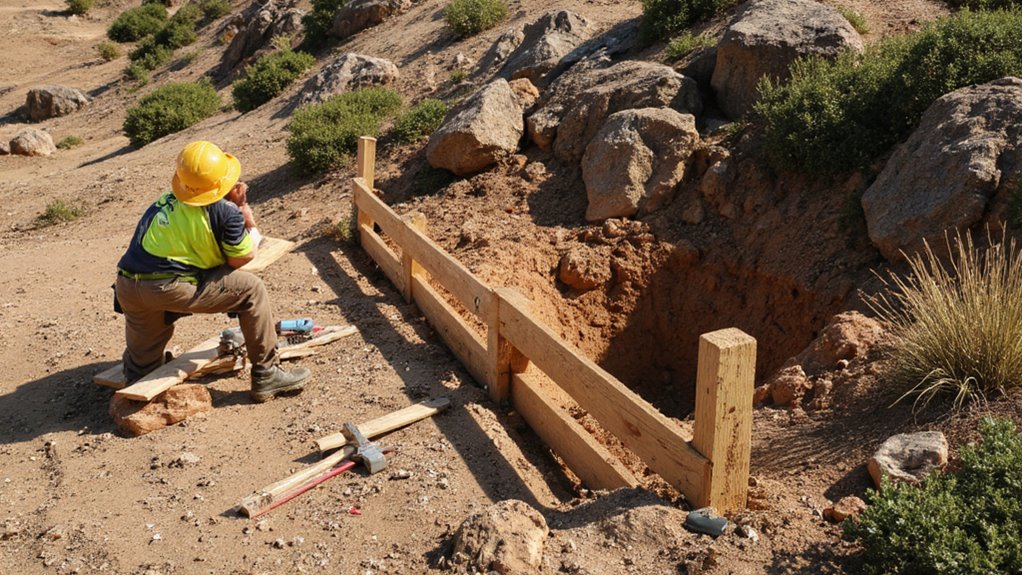
Uneven ground creates several issues that are less common on a flat property. A fence that looks simple from a distance can become much harder to install once you start dealing with elevation changes.
The slope affects the position of each post and the way the fence sections connect. Soil conditions also matter. Loose or eroded soil may not hold posts as well as firm, compact ground.
Water is another concern. Rain naturally moves downhill, and fence posts placed in areas where water collects may be exposed to excess moisture. Over time, that can contribute to wood decay and soil erosion around the posts.
Assessing Slope and Elevation
Before digging any post holes, take time to understand the slope and elevation along the fence line.
A site evaluation can show where the land rises, falls, or changes direction. A level, transit, or similar measuring tool can help you determine how much elevation changes from one post location to the next.
This information helps you decide whether a stepped fence or a contour layout makes more sense. It also helps you plan post heights and avoid sections that look awkward once the fence is installed.
Pay close attention to sharp changes in elevation. A small slope may be easy to handle with standard installation methods, while a steep drop can require a different fence layout or additional support.
Taking these measurements before construction gives you a clearer picture of what the finished fence will look like.
Soil Stability Issues
The condition of the soil can have a direct effect on fence stability. Loose, sandy, or recently disturbed soil may allow posts to shift more easily than firm, compact soil.
Before installing the posts, check the ground along the planned fence line. Look for signs of erosion, loose soil, exposed roots, or areas that stay wet after rain.
Soil compaction can help provide a firmer base around fence posts. Tamping the soil properly during installation can reduce movement. In areas affected by erosion, vegetation or other erosion-control measures may also help hold the soil in place.
Heavy rain can change ground conditions, so it is worth checking the fence line after major storms. Early attention to shifting soil can prevent larger problems later.
Drainage and Water Runoff
Water runoff deserves special attention on sloped properties. Rainwater naturally travels downhill, which can create wet areas around certain fence posts.
Good runoff management helps reduce this problem. Depending on the property, you may use a French drain, gravel trench, swale, or another drainage method to guide water away from the fence line.
The ground should also be shaped so water does not sit around the base of the posts. If a low spot is left directly beside a post, repeated exposure to moisture can increase the chance of wood decay.
Look at the entire fence line rather than treating each post as a separate area. Water from higher ground may travel toward lower sections, so drainage planning should account for the way water moves across the property.
Selecting Durable Woods for Your Fence
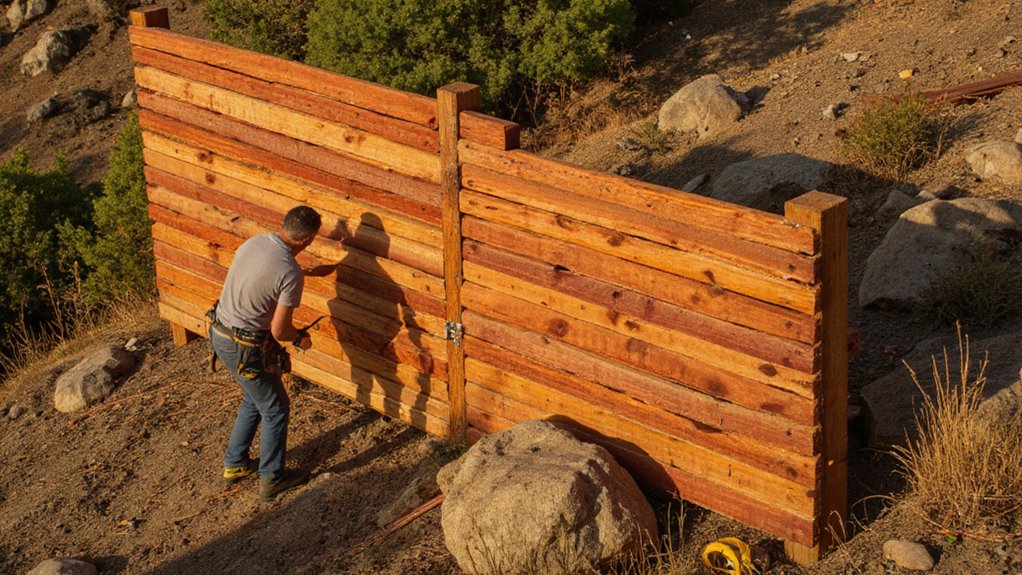
The type of wood fencing you choose can affect how much care the fence needs over the years. Uneven terrain can expose parts of the fence to more moisture, soil movement, and changing weather conditions, so material selection deserves attention.
Cedar, redwood, and pressure-treated wood are common options. Each has different characteristics, costs, and maintenance needs.
Best Wood Types
Cedar is a popular choice because it contains natural oils that can help resist decay and insects. It also has a familiar wood appearance that works well with many fence styles.
Pressure-treated wood is another practical option. The treatment helps protect the wood from moisture, insects, and decay. It is often selected when keeping material costs in check is a concern.
Redwood offers a naturally attractive appearance and good resistance to warping and splitting. It can be a good fit for homeowners who want the appearance of natural wood along with resistance to outdoor conditions.
The best option depends on the local climate, expected maintenance, budget, and appearance you want.
Weather Resistance Factors
Wood fences are exposed to moisture, sunlight, temperature changes, and insects throughout the year. The effect can be more noticeable on uneven ground when certain areas remain damp for longer periods.
Cedar and redwood have natural characteristics that can help them handle outdoor exposure. Pressure-treated pine is another option and is commonly used for outdoor fencing.
Think about the weather patterns in your area when choosing both the wood and the finish. A fence in a wet climate may need more attention to moisture protection, while a fence in a hot, sunny area may need protection from prolonged sunlight.
The finish you choose can also affect how the wood ages. Stains and sealants can help protect the surface when they are applied and maintained according to the product directions.
Maintenance Requirements Overview
A wood fence needs regular attention, especially when it sits on sloped or uneven ground.
Inspect the fence periodically for cracked boards, leaning posts, insect damage, loose fasteners, and areas where water collects. Catching small problems early can make repairs much easier.
Keep grass, vines, shrubs, and other vegetation from staying in constant contact with the fence. Vegetation can hold moisture against the wood and make it harder for the area around the fence to dry.
Depending on the type of wood and finish, you may also need to reapply a stain or protective coating from time to time. Damaged boards can often be replaced individually rather than removing an entire section.
Tools You Need for Installing a Fence on Slopes
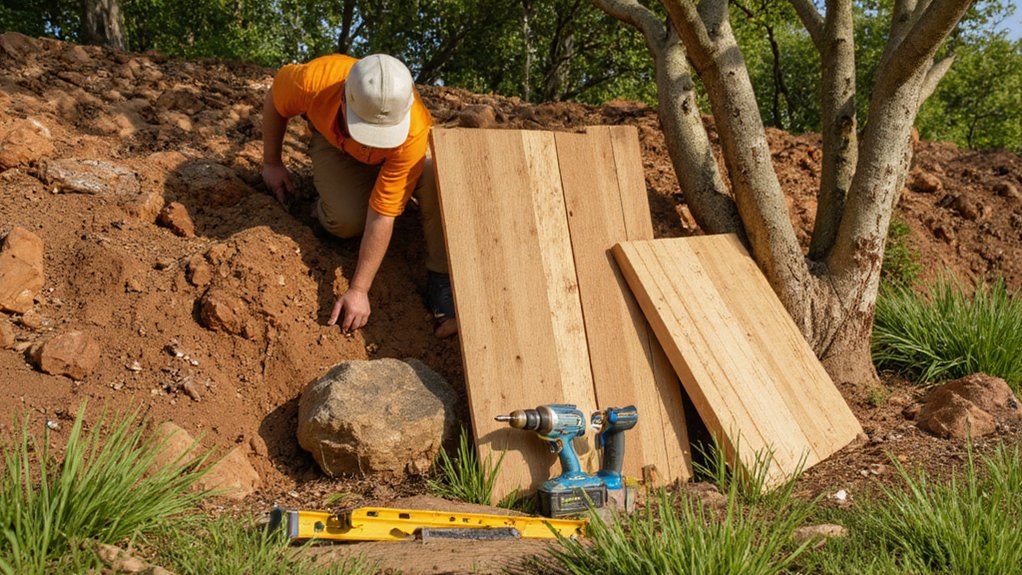
The right tools make it easier to measure, dig, position, and secure a fence on uneven ground.
A measuring tape helps you establish accurate post spacing. A post hole digger is useful for preparing the holes, while a shovel can help with cleanup and adjustments around each post.
A level is essential for checking posts and fence sections. For longer fence lines or properties with noticeable elevation changes, a transit or laser level can make measurements easier.
You may also need a saw for cutting boards and rails, along with a drill or other power tools for fastening the fence components.
Gloves, safety glasses, and suitable footwear are worth having on hand during installation. Concrete mix is commonly used to secure posts, and wood-preserving products may be used to protect exposed surfaces.
Before starting, make sure you have measured the entire fence line and accounted for the tools needed for digging, cutting, fastening, and leveling.
Techniques for Leveling Your Fence Posts
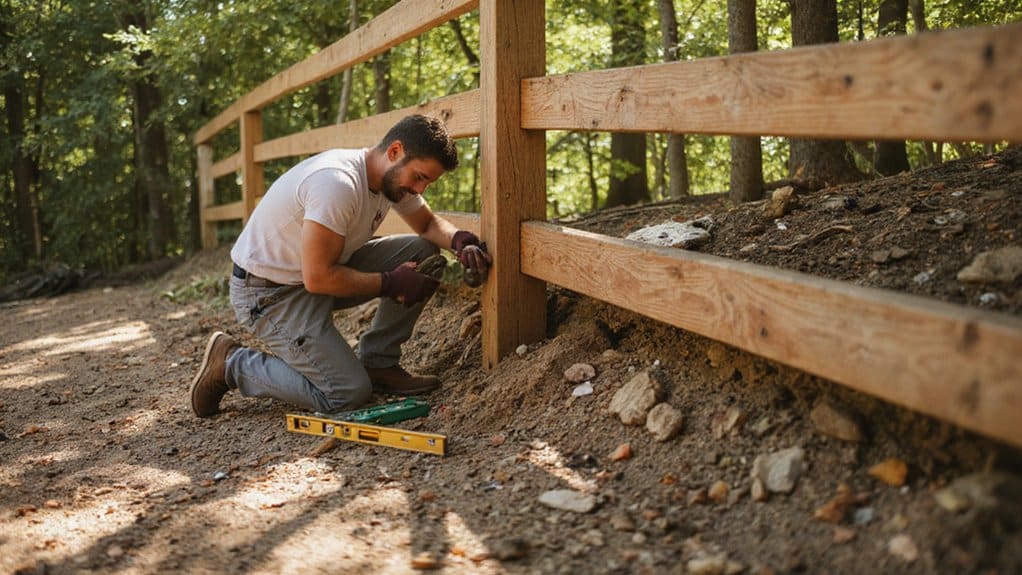
Getting the posts straight is one of the most important parts of a fence installation on uneven ground.
Start by marking each post location along the fence line. A string line can help you keep the posts positioned consistently, even when the ground itself rises and falls.
Post holes may need to vary in depth depending on the terrain. The goal is to provide enough support while keeping the finished fence at the desired height.
Set each post carefully and use a level to check it before the concrete sets. Check the post from more than one direction so it is not leaning forward, backward, or sideways.
For long fence runs, a transit or laser level can make it easier to maintain a consistent layout. Adjustable brackets may also help with certain fence designs where small changes in angle or height are needed.
Do not rush this part of the installation. Small errors in the post positions can become much more noticeable once the rails and boards are attached.
Creative Solutions for Steep Slopes and Drop-Offs
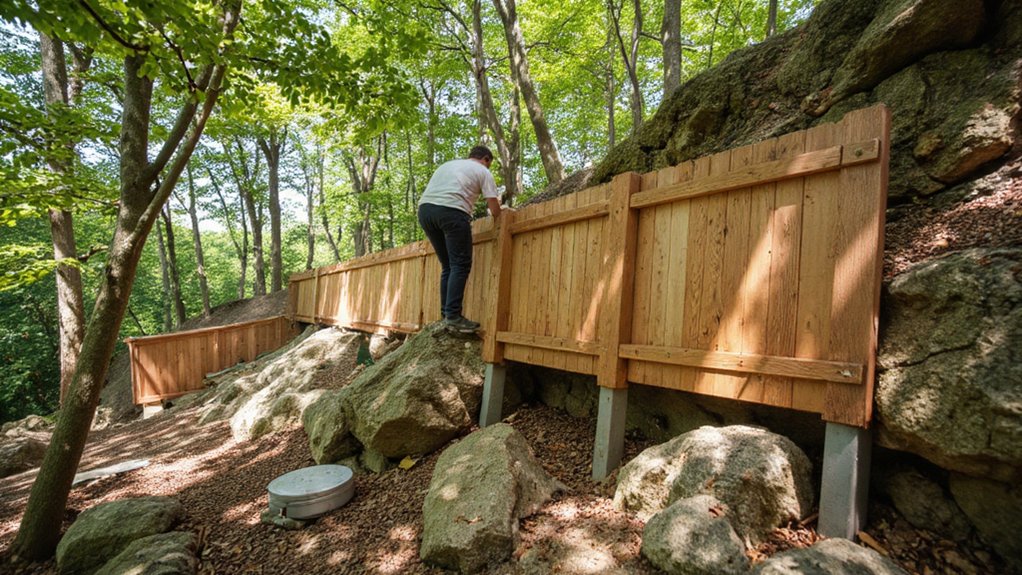
Steep slopes and sudden drop-offs require more planning than a gentle change in elevation.
One option is terraced fencing, where the fence is divided into shorter sections that step down the slope. This can make a steep area easier to manage while giving the fence a deliberate appearance.
A contour fence can also follow the natural shape of the land. This approach may work well when the slope changes gradually and the fence style allows the rails and boards to follow the grade.
Retaining walls may be useful where soil needs additional support. They can help manage elevation changes and reduce erosion, but their construction can involve more planning than a standard fence installation.
Adjustable brackets can be useful in some situations where fence components need to accommodate changes in angle. The best approach depends on the slope, soil, fence style, and amount of elevation change.
Drainage Tips to Protect Your Fence
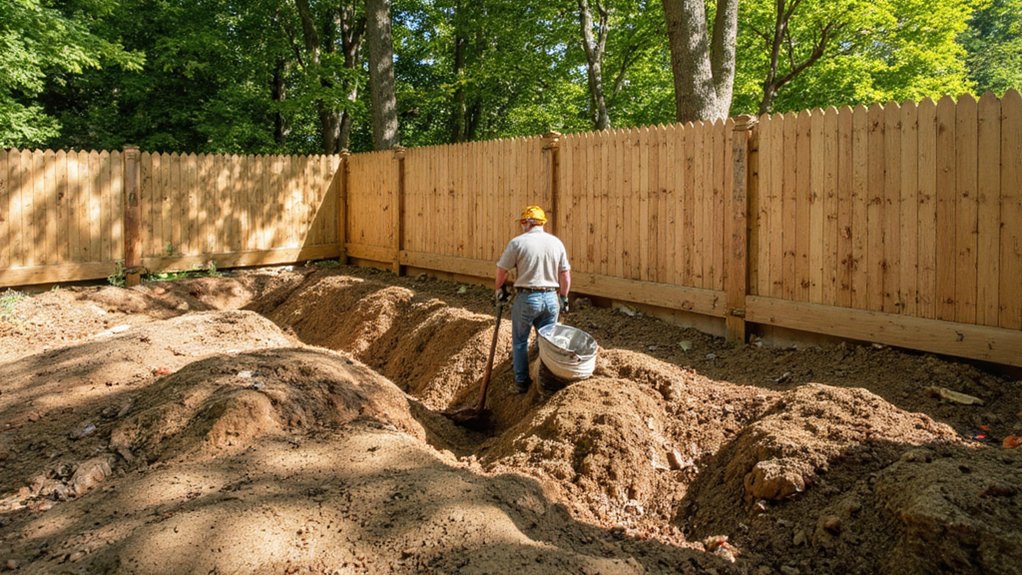
Good drainage can make a major difference to the life of a wood fence on uneven ground.
Start by looking at where water travels during and after rainfall. Avoid creating low areas where water can collect around fence posts.
Gravel can help improve drainage around some fence installations. French drains and gravel trenches can also be used where water needs to be redirected away from the fence line.
The soil around the fence should encourage water to move away rather than remain against the posts. In areas with heavy runoff, a swale or another drainage feature may help direct water toward a suitable outlet.
Check the fence line after periods of heavy rain. Look for standing water, washed-out soil, exposed post bases, or new areas of erosion. These signs can show that drainage needs attention before the problem affects the fence structure.
When to Hire a Professional for Your Fence Installation
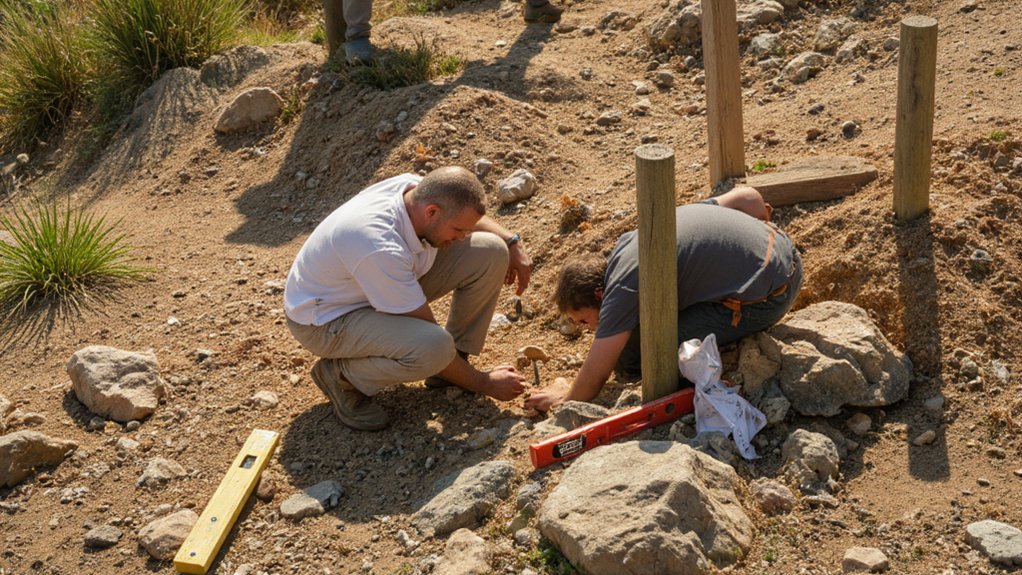
Some uneven properties are manageable as a DIY project, while others can become complicated quickly.
Consider professional help if the property has a very steep slope, rocky soil, major elevation changes, retaining walls, or difficult drainage conditions. These situations can make digging, measuring, and post placement much harder.
It is also worth checking local fence rules before construction begins. Depending on your location, you may need a permit or have requirements for fence height, setbacks, property lines, or placement near other structures.
If you are not comfortable working with concrete, power tools, or post-hole digging, professional installation may also be the better choice.
A properly planned installation can prevent problems such as leaning posts, uneven sections, poor drainage, and premature wood damage. For a complicated site, getting help before construction begins can save considerable repair work later.
Frequently Asked Questions
How Do Weather Conditions Affect Wood Fence Installation on Uneven Terrain?
Weather can affect both the ground and the wood during installation. Rain can soften soil and make post holes harder to prepare, while hot, dry conditions can affect freshly installed materials.
If the ground is saturated, it may be better to wait until conditions improve. After installation, continued exposure to rain, sunlight, and temperature changes can also affect the fence over time.
Can I Use Recycled Wood for My Uneven Terrain Fence?
Recycled wood can be used for some fence projects, but its condition matters. Boards should be checked for rot, insect damage, splitting, and excessive warping before installation.
You may also need to account for differences in board sizes and strength. Post placement and support still need to be planned around the terrain, regardless of whether the wood is new or recycled.
What Permits Are Required for Installing a Fence on Sloped Land?
Permit requirements vary by location. Some municipalities have rules covering fence height, setbacks, property lines, drainage, and placement near roads or other structures.
Before starting the project, contact your local municipality or building department to find out which rules apply to your property. This is especially useful when the fence is close to a property line or sits on a steep slope.
How Long Can I Expect My Wood Fence to Last on Uneven Terrain?
A wood fence can last for many years when it is installed correctly and maintained regularly. The actual lifespan depends on the wood type, climate, drainage, installation method, and level of maintenance.
Uneven terrain can shorten the fence’s life if water collects around the posts or soil erosion causes movement. Regular inspections, proper drainage, and timely repairs can help prevent these issues.
What Are the Best Finishes to Protect Wood on Uneven Surfaces?
Penetrating stains and exterior wood sealers can help protect fence boards from moisture and weather exposure. The right product depends on the type of wood and the conditions around the fence.
Follow the manufacturer’s directions for preparation, application, and reapplication. Before treating the entire fence, make sure the product is suitable for the specific wood and outdoor use.
Conclusion
Installing a wood fence on uneven terrain takes more planning than a standard flat-ground installation, but the challenges can be managed with the right approach.
Start by studying the slope, soil, and drainage along the fence line. From there, choose a fence layout that suits the property, whether that means stepped sections or a contour design. Set the posts carefully, use materials suited to outdoor conditions, and keep water from collecting around the fence.
Regular maintenance also matters. Check for leaning posts, damaged boards, erosion, and drainage problems so small issues do not turn into larger repairs.
If the property has steep slopes, unstable soil, or complicated elevation changes, consider bringing in a professional. A careful installation can help your wood fence remain stable, attractive, and useful for years to come.